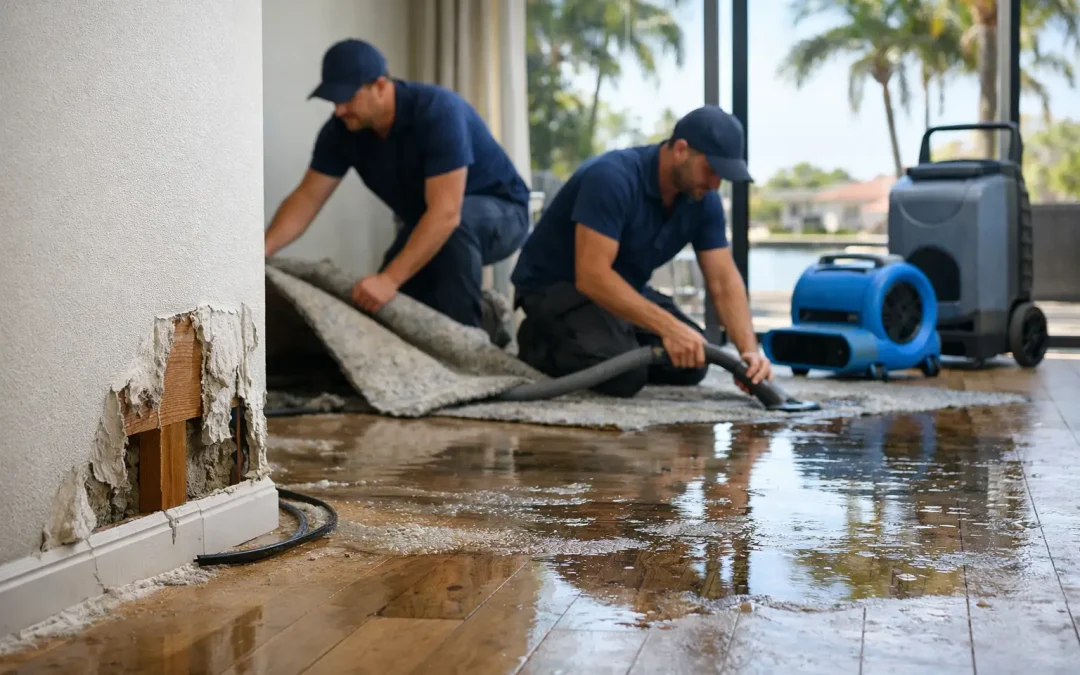
A water heater can fail while you are at work. A toilet supply line can leak behind a vanity overnight. During Tampa Bay’s heavy rains, water can also enter through a roof, window, or door opening before anyone sees the first wet spot. In each case, water damage restoration is not simply about removing visible water. It is about stopping moisture from moving deeper into floors, walls, furnishings, and the indoor environment.
The first hours matter. Fast, informed action can often save carpet, padding, hardwood, luxury vinyl plank, drywall, and personal belongings. Waiting for a room to air-dry, on the other hand, can turn a manageable leak into a larger repair project. A dependable restoration response focuses on safety first, moisture control second, and careful cleaning and recovery throughout the process.
Water Damage Restoration Starts With Speed
Not all water damage looks dramatic. A burst pipe creates an obvious emergency, but a slow appliance leak or a small roof intrusion may cause just as much trouble when it goes unnoticed. Water travels under flooring, through wall cavities, beneath baseboards, and into carpet padding. Florida’s heat and humidity can make it harder for those materials to dry naturally.
The goal is to stop the source, remove standing water, and begin professional drying as soon as possible. The sooner moisture is addressed, the better the chance of limiting swelling, staining, odors, material breakdown, and microbial growth.
If it is safe to do so, shut off the water supply to the affected fixture or the home’s main water line. Avoid walking through water near electrical outlets, cords, appliances, or breaker panels. If water has reached electrical components, sewage is involved, or a ceiling is sagging, keep people and pets out of the area until a qualified professional can assess the situation.
Homeowners can move dry, lightweight belongings from the affected area, but they should avoid pulling up carpet, removing baseboards, or running household fans without knowing what is underneath. Those actions can spread contaminated water, damage materials that could otherwise be saved, or leave moisture trapped behind walls and flooring.
The Type of Water Changes the Cleanup Plan
The source of the water affects how a restoration team approaches the job. Clean water from a supply line or a recent appliance leak may allow for more materials to be cleaned and dried, depending on how long the water was present. Gray water, such as water from a washing machine discharge or dishwasher overflow, requires more caution because it may contain contaminants.
Sewage backups, toilet overflows containing waste, and floodwater from outside are considered highly contaminated. These situations require controlled removal, thorough cleaning, and appropriate disinfection. Porous materials such as carpet padding, insulation, some furnishings, and damaged drywall may need to be removed when they cannot be safely restored.
This is one reason a quick visual inspection is not enough. A room may appear dry on the surface while moisture remains below the flooring or inside a wall. Trained technicians use professional moisture-detection tools to identify where water has traveled and determine which materials can be dried, cleaned, repaired, or removed.
What a Professional Restoration Process Includes
Every property is different, but a thorough water-loss response follows a clear sequence. It begins with an inspection of the source, affected rooms, materials, and safety concerns. Technicians document moisture conditions and create a drying plan based on the type of water, the extent of the damage, and the construction of the property.
Extraction and moisture removal
Standing water is removed with professional extraction equipment. This is especially important for carpeted rooms, where water can soak through the carpet into the padding and subfloor. In many clean-water situations, prompt extraction and controlled drying can help preserve carpet and reduce the need for replacement.
Hard surfaces also need attention. Water can work beneath luxury vinyl plank, laminate, tile edges, and wood flooring. While tile itself is generally water resistant, grout lines, subfloors, and surrounding materials may not be. Wood flooring can cup, buckle, or separate when moisture remains below the surface.
Strategic drying
After extraction, commercial air movers and dehumidifiers are placed to dry the affected materials and reduce indoor humidity. Proper placement matters. Drying equipment should create controlled airflow and remove moisture from the air without causing unnecessary damage to fragile surfaces or forcing moisture into unaffected areas.
Technicians return or monitor conditions as needed, taking moisture readings until materials reach appropriate drying goals. This verification is a critical part of the work. A room can feel dry to the touch before the subfloor, wall framing, or carpet backing has actually dried.
Cleaning, odor control, and restoration
Once the affected area is dry or progressing safely through the drying process, the next steps may include cleaning and sanitizing recoverable surfaces, treating odors, and restoring the appearance of flooring and furnishings. The right cleaning method depends on the material and water category. Carpet, upholstery, area rugs, tile and grout, and hard surfaces each require a different approach.
For Tampa Bay homes and businesses, restoration may also involve coordinating floor repair, replacing damaged materials, or addressing stains and residue left after the emergency is controlled. The aim is not only to make the property look better, but to return it to a clean, stable condition.
Floors Often Need Special Attention
Flooring is usually the first major surface affected by a leak because water naturally moves downward. The outcome depends on the flooring type, how much water was involved, and how quickly drying began.
Carpet can sometimes be restored when clean water is extracted quickly and the backing, padding, and subfloor can dry properly. If water has been present for an extended period, if padding cannot be dried, or if the water is contaminated, replacement may be the safer choice. A professional evaluation prevents homeowners and property managers from guessing.
Luxury vinyl plank is durable, but it is not invincible. Water that reaches seams or becomes trapped underneath can affect the subfloor and create lingering odor concerns. Laminate flooring is more vulnerable to swelling at edges and joints. Wood floors require careful moisture monitoring because aggressive drying or delayed drying can both contribute to damage.
For commercial properties, protecting flooring also helps protect operations. A wet lobby, office, retail floor, or rental unit creates safety concerns and can disrupt tenants, customers, and employees. Fast restoration helps reduce downtime while giving decision-makers a clear understanding of what needs immediate attention and what can be scheduled for repair.
When to Call for Emergency Help
A restoration professional should be contacted promptly when water is spreading, carpeting or flooring is saturated, water has entered walls or ceilings, or the source involves sewage or outdoor flooding. The same is true when a leak occurred hours earlier and you are unsure how far the moisture traveled.
Do not rely on odor alone to judge whether a problem remains. Musty smells may not appear right away, and their absence does not confirm that materials are dry. Likewise, a dehumidifier from a home improvement store can be helpful for mild humidity concerns, but it is not a replacement for a complete drying plan after a significant water event.
Superior Tile & Carpet Care provides local water and flood damage restoration for Tampa Bay property owners who need a responsive, careful approach. Family-owned service, trained technicians, professional-grade equipment, and a focus on protecting recoverable materials all matter when a property is suddenly disrupted by water.
After the immediate emergency is under control, keep records of the source, photos of affected areas, and any repairs or restoration work completed. Those details can help with insurance communication and future property maintenance. Most of all, treat even a small leak with appropriate urgency: the water you cannot see is often the part that deserves the closest attention.