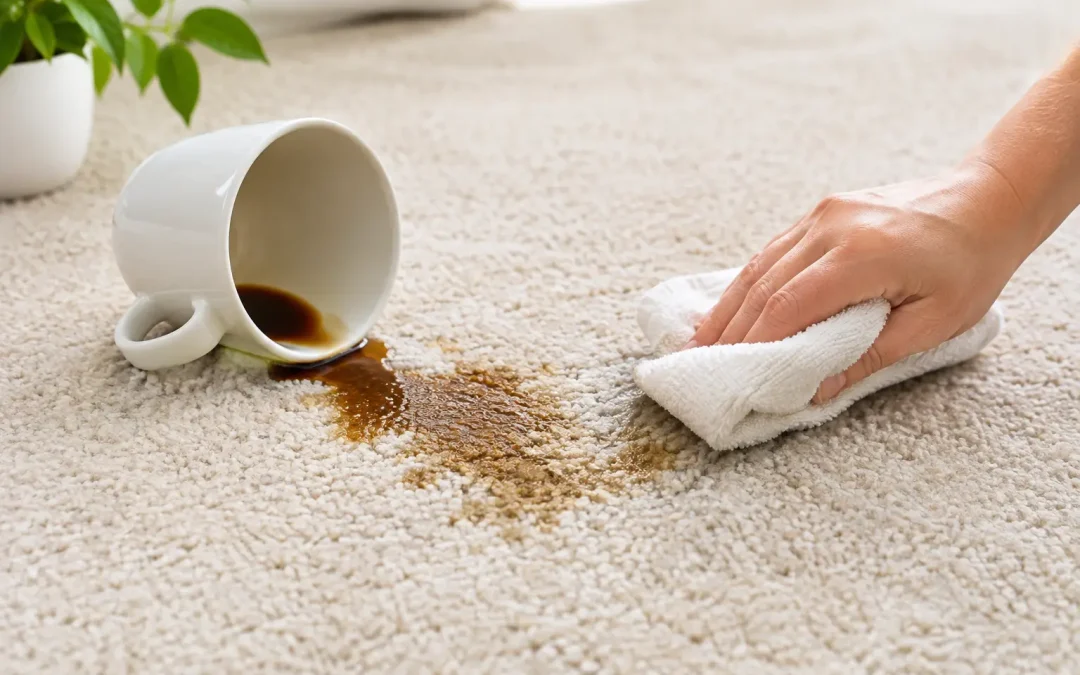
A fresh coffee spill can look harmless at first, especially on a darker carpet. Give it time, though, and the brown pigments can settle into the fibers while cream and sugar leave behind a sticky residue that attracts more soil. Knowing how to remove coffee stains from carpet quickly can protect both the appearance of the room and the life of the flooring.
The best approach is gentle, controlled, and prompt. Rubbing hard, oversaturating the carpet, or reaching for an aggressive cleaner can spread the stain or create a larger problem than the original spill.
What Makes Coffee Stains Difficult to Remove?
Black coffee contains natural tannins, which are plant-based color compounds that can bond to carpet fibers. A spill with milk, creamer, syrup, or sugar is more complicated because it leaves oils and residue in addition to color.
In Tampa Bay homes and businesses, humidity can add another concern. Carpet that stays damp too long may develop an odor, encourage mildew growth, or leave a visible water ring. The goal is not simply to make the brown spot disappear. It is to remove the coffee residue, rinse the area properly, and dry the carpet thoroughly.
Act Fast, but Do Not Scrub
Start by removing as much liquid as possible. Place a clean, white absorbent towel over the spill and press firmly. Replace the towel as it becomes wet, then continue until it is no longer pulling up coffee.
Use white towels rather than colored cloths, napkins with printed designs, or paper towels that may shed. The last thing you want is dye transfer or bits of paper caught in the carpet pile.
Avoid scrubbing in circles. Scrubbing pushes coffee deeper into the backing, roughens the fiber tips, and can make the affected area look fuzzy even after the stain is gone. Blot from the outer edge toward the center so the spill does not spread.
If there are coffee grounds on the carpet, allow the area to dry slightly before vacuuming them up. Rubbing wet grounds into the fibers can create a darker, more stubborn stain.
How to Remove Coffee Stains From Carpet at Home
For a new spill, a mild cleaning solution is often enough. Mix a small amount of clear dish soap with cool water. You only need enough soap to create a lightly sudsy solution. Too much detergent can leave behind residue that attracts dirt after the carpet dries.
Test Before Treating the Stain
Before applying any solution, test it in a hidden part of the carpet, such as inside a closet or beneath a piece of furniture. Dab a small amount onto the fibers, blot it dry, and check for color loss or texture changes.
This matters most with wool, silk, natural-fiber rugs, older carpeting, and carpets with specialty dyes. A cleaning method that works on a synthetic apartment carpet may not be appropriate for a handwoven area rug or a high-end wool installation.
Apply Solution Sparingly
Lightly dampen a clean white cloth with the soap-and-water mixture. Do not pour the solution directly onto the carpet. Gently blot the coffee stain, working from the outside toward the center.
As the stain transfers to the cloth, rotate to a clean section. Continue until little or no brown color comes up. Patience helps here. Several gentle passes are safer than one aggressive attempt.
Rinse Away the Soap
Once the coffee color has lifted, use another cloth lightly dampened with plain cool water to blot the treated area. This step is often skipped, but it is important. Soap residue can make a clean-looking spot turn dingy faster than the surrounding carpet.
Blot again with dry towels to remove as much moisture as possible. Place a dry towel over the area and weigh it down with a book or another non-staining object for 15 to 30 minutes if needed.
Dry the Carpet Completely
Use ceiling fans, air conditioning, or a portable fan to circulate air across the treated spot. Keep foot traffic away until the carpet is dry. If the fibers look flattened, gently brush them upright with a clean, soft brush once the area has dried.
Do not use high heat from a hair dryer. Heat can set some stains, shrink certain fibers, and dry the surface before moisture deeper in the carpet has a chance to escape.
What to Do With Dried Coffee Stains
A dried coffee stain needs a little more time, but it can often still be improved. Begin by lightly dampening the spot with cool water. Let the moisture sit for a few minutes to soften the dried residue, then blot with a white towel.
Follow with the same mild dish-soap solution, using small amounts and repeated blotting. Do not soak the carpet. The goal is to rehydrate the stain enough to lift it, not to send moisture into the pad or subfloor.
If a faint brown shadow remains after the carpet dries, a professional-grade stain treatment may be needed. The safest choice depends on the carpet fiber, its color, the age of the stain, and whether the coffee included cream or flavored additives. Using the wrong spot remover can bleach the carpet, create a light ring, or leave a chemical residue behind.
Common Mistakes That Can Make the Stain Worse
Household cleaning advice can be inconsistent, and some popular methods carry real risks. Bleach should never be used on carpet unless a trained professional has identified a fiber-safe, color-safe reason to use a specific product. It can permanently remove dye and weaken carpet fibers.
Vinegar can be useful in limited situations, but it is not a universal carpet cleaner. Its acidity may not be suitable for every carpet type, and mixing vinegar with other products can create unwanted reactions. Avoid combining cleaners, especially products that contain bleach or ammonia.
Another common mistake is using too much water. A surface stain may look clean while moisture and dissolved coffee have moved deeper into the carpet backing. This can lead to wicking, where a stain reappears as the carpet dries, or to odors that were not present before treatment.
Store-bought aerosol spot cleaners can also leave residue when they are overapplied or not rinsed. They may provide a quick visual improvement, but a sticky patch can collect soil and become noticeable again within weeks.
When Professional Carpet Cleaning Is the Better Choice
Call a professional when the coffee stain is large, old, repeatedly reappears, or has spread into the padding. Professional service is also a wise choice for wool carpet, area rugs, patterned carpet, delicate fibers, and stains in visible areas such as entryways, living rooms, hotel rooms, offices, or rental turnovers.
A trained technician can identify the fiber, select an appropriate treatment, flush residue from below the surface, and use extraction equipment to remove moisture more effectively than towels alone. This is especially valuable when coffee was spilled with milk, creamer, protein-based additives, or sweeteners that can leave behind odors.
For property managers and commercial facilities, prompt professional cleaning can also help preserve a presentable customer-facing space without replacing carpet prematurely. Scheduling routine carpet care makes spot treatment more successful because less embedded soil is available to bond with fresh spills.
Superior Tile & Carpet Care provides professional carpet cleaning and specialty stain treatment with trained technicians, professional equipment, and cleaning solutions selected for the surface being treated. For a stubborn coffee stain, the focus is on restoring the carpet without taking unnecessary risks with the fibers underneath.
Preventing the Next Coffee Spill From Becoming a Permanent Spot
A few practical habits make a difference. Use travel mugs with secure lids in carpeted rooms, keep a stack of clean white towels available for quick blotting, and address spills before they dry. In offices, waiting areas, and rental properties, placing drink stations away from carpeted walkways can reduce recurring spots.
Regular professional cleaning also helps carpet resist the worn, dull look that makes every new spill stand out. Clean fibers release fresh stains more readily than carpet carrying months or years of embedded soil.
Coffee happens. A calm response, light moisture, careful blotting, and proper drying will handle many fresh spills. When the stain does not respond or the carpet is too valuable to gamble on, getting experienced help early can save the floor from a much more permanent reminder of a rushed morning.