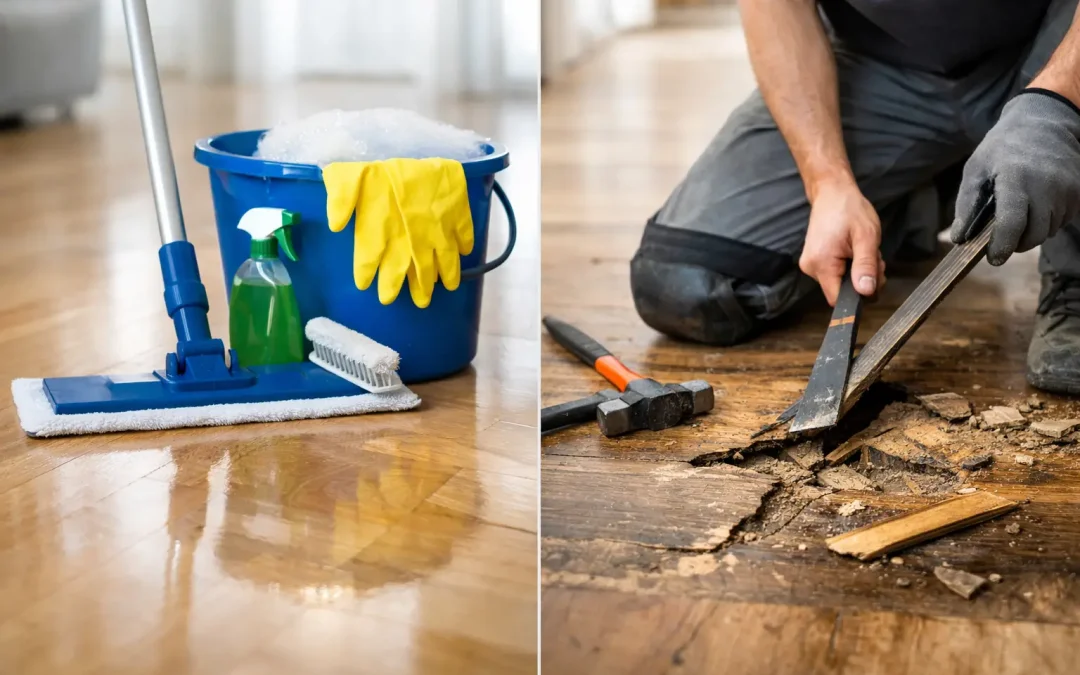
A floor can look like it only needs a deep cleaning until a soft spot develops near the dishwasher, vinyl planks begin lifting at the seams, or carpet stays damp after a leak. Floor repair addresses the damage beneath and around the surface, helping Tampa Bay homeowners and property managers protect the structure, appearance, and usable life of their flooring.
Cleaning remains an essential part of floor care, but it cannot correct a failed subfloor, warped wood, loose tile, or padding that has absorbed contaminated water. Knowing the difference can prevent a small, manageable issue from becoming a larger restoration project.
When Floor Repair Is the Right Call
Daily traffic, pets, moving furniture, humidity, and spills all leave their mark. Many surface concerns respond well to professional cleaning, stain treatment, or refinishing. Repair becomes necessary when the floor itself has changed shape, lost stability, separated, or sustained moisture damage.
A floor that feels uneven underfoot deserves attention, especially after plumbing leaks, appliance failures, roof leaks, or floodwater. Moisture can travel below carpet, laminate, vinyl, tile, and wood without being visible from above. By the time discoloration or odor appears, the affected materials may already be holding moisture or supporting mold growth.
Commercial properties face similar concerns, often with higher stakes. Loose flooring in a hallway, entryway, or customer-facing area can become a trip hazard. Damaged floors can also make routine cleaning less effective because dirt and moisture collect in cracks, lifted edges, and failing grout lines.
Signs Your Flooring Needs More Than Cleaning
Some problems are easy to spot. Others show up as subtle changes in how the floor looks, feels, or smells. It is wise to schedule an assessment when you notice several of the following conditions:
- Carpet feels damp, develops a persistent odor, or separates from the tack strip.
- Wood planks cup, buckle, split, or show dark staining along joints.
- Luxury vinyl plank flooring lifts, curls, separates at seams, or feels soft beneath your feet.
- Tile cracks repeatedly, rocks when stepped on, or has loose and crumbling grout.
- Laminate boards swell at the edges, bubble, or no longer lock together tightly.
Not every damaged area requires full replacement. A localized repair may be possible when moisture was contained quickly and the surrounding flooring remains stable. On the other hand, patching over a wet or weakened subfloor can hide the immediate problem while allowing damage to continue underneath.
Water Damage Changes the Repair Decision
In Florida, water is one of the most common reasons flooring fails. A slow supply-line leak, overflowing toilet, storm intrusion, or air-conditioning issue can affect more than the visible wet spot. Water may travel through padding, under vinyl, along wood framing, and into adjacent rooms.
The first priority is stopping the water source and removing standing water safely. The next is determining how far moisture has traveled. Professional moisture inspection and drying equipment help identify affected areas that ordinary fans and towels cannot reach. This matters because flooring materials dry at different rates, and some materials should be removed rather than dried in place.
Carpet and padding, for example, may be salvageable after a clean-water incident if the response is fast and materials can be thoroughly dried. Floodwater, sewage backups, and other contaminated water create a different situation. Those conditions often require removal of affected porous materials to protect indoor health and prevent odors from returning.
Wood flooring requires a careful approach. Premature removal can mean losing material that might have been restored, while delayed drying can lead to permanent cupping, warping, and mold concerns. The right recommendation depends on the source of water, duration of exposure, moisture readings, floor construction, and the condition of the subfloor.
Floor Repair for Common Surface Types
Carpet and Padding
Carpet repair may involve stretching loose sections, addressing damaged seams, replacing affected padding, or treating odor after a pet accident or water event. When water has reached the pad or subfloor, cleaning the carpet face fibers alone is not enough. Proper extraction, drying, and inspection protect the floor below the carpet as well as the carpet itself.
Tile and Grout
Cracked or loose tile is not always a cosmetic issue. It may point to movement in the subfloor, poor adhesion, water intrusion, or failed grout. Replacing an individual tile can be practical if the surrounding installation is sound. If tiles continue to crack in the same area, the underlying cause should be corrected before new tile is installed.
Luxury Vinyl Plank and Laminate
Luxury vinyl plank is popular because it handles everyday spills well, but it is not immune to water that gets beneath the planks. Seams may release, adhesive may fail, and moisture can become trapped against the subfloor. Laminate is generally less forgiving, since its core can swell after exposure. In either case, lifting affected sections and checking the floor underneath is often necessary before deciding whether repair or replacement makes sense.
Wood Flooring
Wood floors can often be restored after scratches, dullness, and ordinary wear. Water damage is more complex. Minor cupping may improve with controlled drying, while severe buckling or delamination may require removal and replacement of affected boards. Refinishing should happen only after moisture conditions are stable. Sanding or coating a floor that is still damp can create further problems.
Why the Subfloor Matters
The finished floor gets the attention because it is what people see, but the subfloor supports everything above it. When it becomes wet, soft, or structurally compromised, even a beautiful new surface will not perform as it should.
During a floor repair assessment, trained technicians look for changes in elevation, soft spots, moisture migration, and signs that flooring materials have separated from the base. In some cases, only a limited section needs attention. In others, the damage extends behind baseboards, under cabinets, or into an adjoining room.
This is where prompt action saves money. Drying and targeted repair are usually less disruptive than waiting until flooring collapses, mold odors become persistent, or a tenant reports an unsafe walking surface.
Repair, Restoration, or Replacement?
The best answer depends on the flooring type, cause of damage, age of the installation, and condition of the materials below it. Repair is often the right choice when damage is isolated and replacement materials are available. Restoration may be possible when a floor is structurally sound but stained, scratched, soiled, or affected by a limited moisture event.
Replacement becomes the responsible option when materials are contaminated, extensively warped, structurally weak, or no longer able to perform safely. An honest assessment should explain the trade-offs clearly. Saving a section of flooring may reduce cost and disruption, but only if that section can be dried, cleaned, and stabilized properly.
For rental homes and commercial facilities, timing also matters. A quick, professional evaluation helps owners plan around tenant occupancy, business hours, and insurance documentation. Addressing the issue early can reduce downtime and help preserve a presentable, safe environment.
What to Do Before Help Arrives
If a leak or flood has affected your flooring, stop the source of water if it is safe to do so. Move furniture and personal belongings away from the affected area, but avoid walking repeatedly across wet carpet or unstable flooring. Do not remove baseboards, pull up flooring, or run high heat on wood without guidance, since those actions can complicate restoration.
Take photos of the affected area and note when the damage was discovered. This can be useful for property records and insurance claims. If the water came from sewage, outdoor flooding, or another contaminated source, keep people and pets away from the area until it has been professionally evaluated.
A Local Approach to Protecting Tampa Bay Floors
Flooring problems rarely arrive at a convenient time. A dependable local provider should be prepared to handle routine wear, targeted floor repairs, and urgent water-related damage with the same attention to safety and property protection. Superior Tile & Carpet Care brings trained technicians, professional equipment, and a practical restoration mindset to homes and commercial properties throughout Tampa Bay.
The goal is not simply to make the floor look better for the moment. It is to identify what happened, protect the materials that can be saved, and recommend the next step that makes sense for your property. When a floor starts to feel different underfoot or a water event leaves you uncertain, early evaluation gives you more options and a clearer path forward.