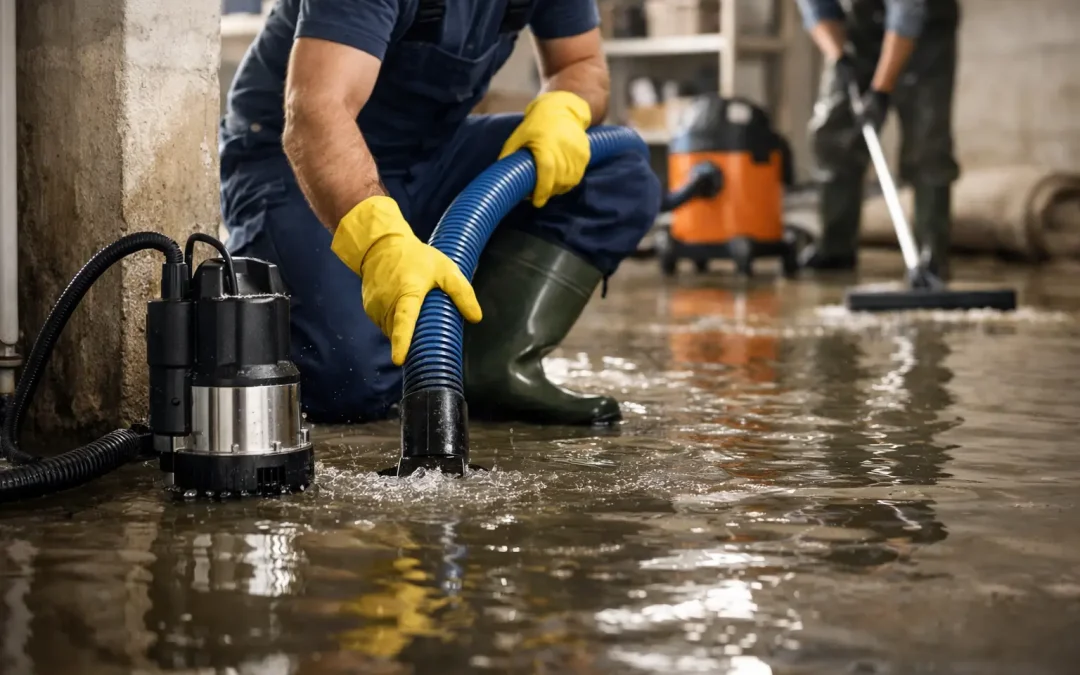
A flooded basement can change from a wet-floor problem to a building-material and mold problem in a matter of hours. This flooded basement cleanup guide focuses on the decisions that protect your family, your property, and the flooring and furnishings below grade. The right first move is not always grabbing a wet vacuum. Safety, the source of the water, and how long materials have been wet should determine what happens next.
Start With Safety Before Entering the Basement
Do not enter a flooded basement if standing water may have reached outlets, appliances, electrical panels, extension cords, or powered equipment. Turn off electricity to the affected area only if you can do so without standing in water. If you are unsure, wait for a qualified electrician or restoration professional.
Water type matters just as much. A broken supply line or appliance leak may involve relatively clean water at the start, although it can become contaminated after moving through a basement. Water from a backed-up drain, sewer line, stormwater runoff, or an overflowing toilet should be treated as contaminated. It can contain bacteria and other hazards that make DIY cleanup unsafe.
Before cleanup begins, take photos and short videos of the water level, damaged materials, and the apparent source. This documentation can help with insurance reporting and provides a useful record of conditions before items are moved or discarded.
Avoid entering or beginning cleanup when any of these conditions apply:
- The electrical system may be energized or damaged.
- The water came from sewage, an unknown drain backup, or outside floodwater.
- The foundation wall is cracked, bowed, or visibly shifting.
- Water is deep enough to conceal hazards, such as debris, glass, or submerged equipment.
- The area contains significant mold growth or has been wet for more than a day or two.
Stop the Water Source and Protect the Rest of the Property
If the flood came from a plumbing leak, shut off the nearest supply valve or the home’s main water valve. For an appliance leak, stop the appliance if it is safe to reach its control or valve. If rainwater is entering the basement, the immediate goal is to reduce continued entry while protecting yourself. Do not place yourself in danger trying to block a severe stormwater flow.
Move dry belongings away from the affected area before they absorb moisture. Set furniture blocks, foil, or plastic under furniture legs when possible to limit staining and moisture transfer. Remove area rugs, boxes, and loose items from wet flooring. Cardboard boxes are especially deceptive because they hold water against concrete, carpet, and baseboards long after the surface looks dry.
For property managers and commercial facilities, isolate the area and keep staff, tenants, and visitors away. A clear response plan can reduce slip hazards, protect records or inventory, and prevent well-meaning employees from using unsafe equipment around water.
Flooded Basement Cleanup Guide: Remove Water Quickly
Once the basement is safe to enter and the water source is controlled, remove standing water as soon as possible. A wet/dry vacuum can help with small, clean-water events. For larger losses, professional extraction equipment removes water more thoroughly and quickly than household tools, especially from carpet padding, seams, and uneven concrete surfaces.
Do not use a standard household vacuum on water. It is not designed for wet extraction and can create an electrical hazard. A sump pump may be appropriate for significant clean-water accumulation, but pumping out water too rapidly can create pressure concerns in some circumstances, particularly when the surrounding soil is saturated. If groundwater is involved or water levels are substantial, professional guidance is the safer choice.
Carpet requires a careful decision. If it was exposed only briefly to clean water and can be extracted, lifted, and dried promptly, restoration may be possible. Carpet padding, however, often needs to be removed because it traps moisture and is difficult to dry completely. Carpet affected by sewage, floodwater, or other contaminated water generally should not be saved.
Hard surfaces may look fine after extraction, but moisture can remain under luxury vinyl plank, laminate, wood flooring, baseboards, and wall materials. Wood can cup or buckle. Laminate can swell at the edges. Vinyl products may resist water on the surface while still allowing moisture to reach the subfloor through seams and perimeter gaps. Drying decisions should be based on moisture readings, not appearance alone.
Remove Wet Materials That Cannot Be Safely Dried
Porous materials hold water and can support mold growth if they remain damp. Wet insulation, damaged drywall, carpet padding, paper-faced materials, and particleboard furniture often require removal after a significant flood. The exact scope depends on the water category, how long the materials were wet, and whether drying equipment can reach all affected areas.
For clean water caught early, some drywall and baseboards may be salvageable through controlled drying. If water wicked several inches up the wall, professionals may remove a measured section of drywall to expose the wall cavity and allow proper airflow. Cutting materials without a plan can create unnecessary repairs, but leaving wet materials enclosed can lead to odor and hidden mold.
Keep salvageable belongings separate from items that need disposal. Upholstered furniture, area rugs, draperies, and specialty textiles may need professional evaluation. Some can be cleaned and restored; others may retain contamination or odor that makes replacement the responsible option.
Dry the Basement Completely, Not Just the Surface
Extraction is only the first stage. Effective drying uses air movement, dehumidification, and moisture monitoring to pull water from materials and lower indoor humidity. Open windows may help under the right weather conditions, but in humid Tampa Bay weather, bringing outdoor air inside can slow drying rather than improve it. A dehumidifier and properly positioned air movers are often more effective.
Keep the basement closed off from unaffected areas when possible, particularly if odors, contamination, or suspected mold are present. Check nearby rooms, closets, stairwells, and walls for moisture migration. Water can travel underneath flooring and through wall cavities farther than expected.
A basement is not fully dry because it feels dry underfoot. Concrete can retain moisture, and framing, subfloors, and wall cavities may stay wet after the visible water disappears. Restoration technicians use moisture meters and other professional tools to identify where drying is still needed and to confirm that materials have returned to acceptable moisture levels.
Clean, Disinfect, and Address Odors Carefully
After removal and drying are underway, clean hard, nonporous surfaces with an appropriate cleaning product. Disinfection may be needed after contaminated water exposure, but it does not replace extraction, removal of unsalvageable materials, or full structural drying. Never mix cleaning chemicals, and use gloves, eye protection, and ventilation according to product directions.
Musty odor is a warning sign, not simply a nuisance to cover with fragrance. It can point to moisture remaining under flooring, behind baseboards, or inside walls. Treating the source of the odor is more effective than masking it. Green cleaning products can be part of the cleaning process, but the central restoration priority remains removing moisture and contamination.
Know When to Call a Restoration Professional
Small spills on a sealed concrete floor may be manageable with prompt extraction and drying. A flooded basement caused by a burst pipe, storm intrusion, failed sump pump, sewage backup, or water that reached finished floors and walls deserves a faster, more thorough response.
Professional restoration is especially valuable when the loss affects carpet, luxury vinyl plank, wood, drywall, insulation, upholstery, or air quality. Certified technicians can assess the source, extract water, set drying equipment, monitor moisture, clean affected surfaces, and identify flooring or structural materials that need repair. For commercial properties, this also helps limit downtime and preserve a safe environment for employees and customers.
Superior Tile & Carpet Care provides emergency water and flood damage restoration for Tampa Bay homes and businesses, with trained technicians equipped to address water removal, floor concerns, and the drying process with care.
Once the immediate cleanup is complete, give the basement a better chance in the next storm or plumbing emergency. Test the sump pump, clear drainage routes, store belongings off the floor, inspect supply hoses and plumbing connections, and address recurring moisture rather than accepting it as part of basement life. A dry, properly maintained basement protects far more than the room itself.