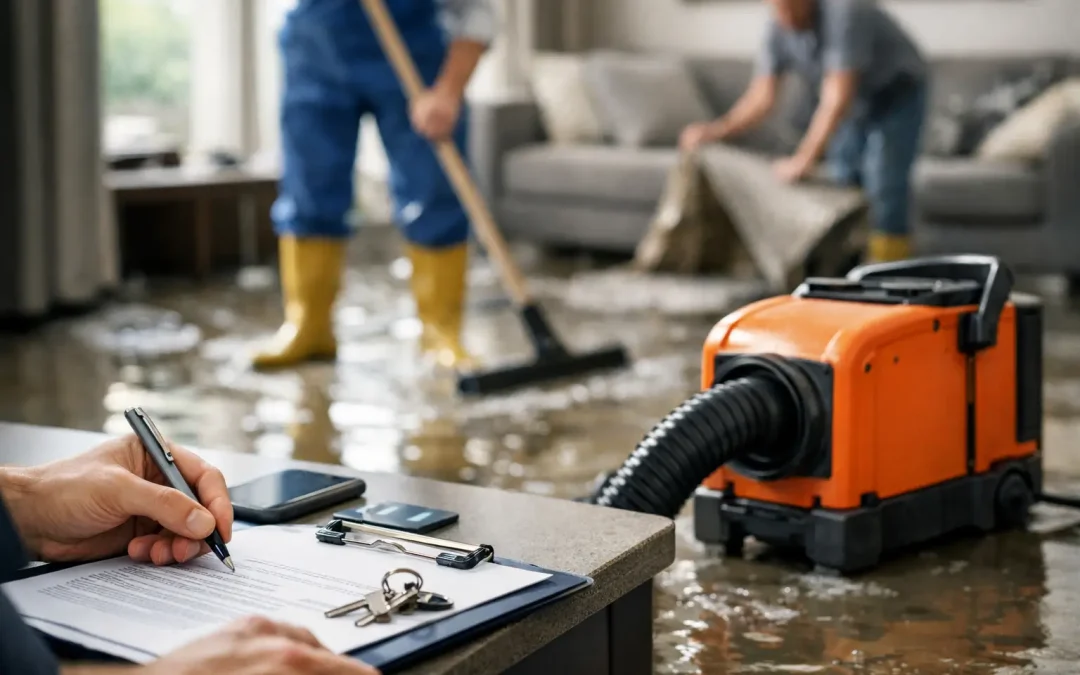
A flooded home or business can change by the hour. Water can move beneath flooring, wick into drywall, affect baseboards, and create conditions for mold before the visible puddles are gone. This flood restoration insurance claims guide helps Tampa Bay property owners take the right early steps: protect people, document the loss, prevent further damage, and give the insurance carrier the information needed to evaluate the claim.
The priority is always safety and stabilization, not a perfect claim file. Once the property is safe, thorough documentation and prompt professional restoration can help preserve both the building and your ability to show what happened.
Start With Safety and Damage Control
Do not enter standing water if electrical hazards may be present. If water reached outlets, appliances, electrical panels, or areas near damaged wiring, wait for qualified help. Floodwater can also contain sewage, chemicals, and bacteria, particularly after storms, drain backups, or outdoor flooding.
If it is safe to do so, stop the water source. Shut off the main water supply for a broken pipe, move undamaged belongings to a dry area, and place foil or blocks under furniture legs where practical. Avoid using a household vacuum to remove standing water or running your HVAC system if water may have entered ducts or equipment.
Your policy generally expects reasonable steps to prevent additional damage. That does not mean you should begin major demolition before the insurer has a chance to assess the loss. It means taking sensible emergency measures, such as water extraction, drying, temporary protection, and removal of saturated materials that create an immediate health or structural concern. Keep every receipt for emergency work, supplies, hotel stays if covered, and damaged-property replacement purchases.
Flood Restoration Insurance Claims Guide: Know What Caused the Water
The word “flood” has a specific meaning in many insurance policies. Damage from rising water, storm surge, overflowing waterways, or surface water entering a building is often handled differently than water damage from a sudden plumbing failure, appliance leak, or roof opening caused by wind.
Standard homeowners and commercial property policies may cover certain accidental and sudden water losses, but they often exclude flood damage unless separate flood coverage is in place. Flood insurance, including policies associated with the National Flood Insurance Program, may have its own documentation requirements, limits, exclusions, and deadlines. A sewer or drain backup may also require a separate endorsement.
Do not assume coverage based on the appearance of the damage. Report the loss promptly and describe the facts: where the water came from, when it was discovered, how far it traveled, and what materials were affected. The insurer will determine coverage. A restoration contractor can document moisture conditions and affected building materials, but cannot decide whether your policy pays for the loss.
Document Before Cleanup Changes the Scene
Photos and video are among the most useful tools in a water-loss claim. Take wide shots of each affected room, then close-ups of damaged flooring, walls, furniture, contents, and the suspected source of water. Capture water lines on walls, soaked carpet, warped luxury vinyl plank, damaged tile underlayment, and any exterior conditions that contributed to the event.
Create a written record while details are fresh. Include the date and time of discovery, weather conditions if relevant, who was present, when the water source was stopped, and each call you made. For a rental property or commercial facility, record tenant reports, business interruption details, and areas that were closed or unusable.
Make a room-by-room inventory of damaged contents. Include the item, approximate age, purchase price if known, condition before the loss, and whether it can be cleaned, restored, or needs replacement. Do not discard damaged items until the adjuster or carrier says it is acceptable, unless they are unsafe or must be removed to prevent further damage. If disposal is necessary, photograph the item thoroughly first and retain samples when practical.
Open the Claim Quickly and Keep a Clear File
Contact your insurance carrier or agent as soon as you can safely do so. Ask for the claim number, the adjuster’s contact information, and instructions regarding emergency mitigation. Write down the name of every representative, the date of the conversation, and what was discussed.
A simple claim folder can prevent confusion later. Keep policy documents, claim correspondence, estimates, invoices, photos, videos, moisture reports, receipts, and notes in one place. Save copies digitally as well. Email is useful because it creates a dated record, but follow up on urgent matters by phone when needed.
Be accurate and specific when communicating. “Water entered through the rear door during heavy rain at approximately 3:00 p.m.” is more useful than “the house flooded.” Avoid guessing about causes, costs, or coverage. If new damage becomes apparent during drying or removal of affected materials, document it and notify the carrier promptly.
Choose Restoration Work That Supports the Claim
Fast, professional drying can be the difference between restoring materials and replacing them. Water can travel beneath carpet, padding, baseboards, cabinets, floating floors, and wall surfaces. What looks dry on top may still hold moisture below, where odors, deterioration, and mold growth can develop.
A qualified restoration team should assess the affected areas, extract water, set drying equipment when appropriate, monitor moisture levels, and document the work performed. For contaminated water, the scope may include removal of materials that cannot be safely cleaned. The correct approach depends on the water source, how long materials were wet, the type of flooring, and the condition of the property.
For example, ceramic tile may appear unharmed while moisture remains in grout lines, beneath the tile, or in the subfloor. Carpet can sometimes be restored after a clean-water event addressed quickly, but padding often requires replacement. Wood and luxury vinyl plank may need a different response depending on whether the material has swelled, separated, trapped water, or lost structural stability.
Superior Tile & Carpet Care provides emergency water and flood damage restoration with trained technicians and professional-grade equipment for Tampa Bay homes and businesses. The goal is to stabilize the property, document conditions clearly, and help protect flooring and interior materials from avoidable secondary damage.
Review Estimates Without Focusing Only on the Bottom Line
An insurance estimate may include drying, removal, cleaning, repairs, and replacement of approved materials. Review the scope carefully. Ask what areas were inspected, which materials are being removed or restored, whether moisture testing supports the recommendations, and what repairs are included after emergency mitigation is complete.
Price matters, but an unusually low estimate can leave out necessary drying, content handling, floor preparation, or repairs. On the other hand, not every wet material automatically needs replacement. Good restoration work is based on documented conditions, safety considerations, and the realistic ability to return materials to a clean, stable condition.
If you disagree with the insurer’s decision or the scope of work, request a written explanation and provide supporting documentation. Your policy may include procedures for supplemental claims, reinspection, appraisal, or dispute resolution. Consider speaking with a licensed public adjuster or attorney if the disagreement is significant and you need advice specific to your policy and situation.
Watch for Common Claim Delays
Claims often slow down when documentation is scattered, damaged items are thrown away too soon, or restoration starts without a clear record of the initial conditions. Delays can also occur when owners wait to report the loss because they are uncertain about coverage. Reporting does not obligate the carrier to pay, but waiting can make the cause and extent of damage harder to verify.
For commercial properties, delays may affect tenants, customers, staff, and revenue. Document closed areas, cleanup actions, relocation expenses, and any operational interruption. Property managers should also keep owners, tenants, vendors, and insurers working from the same current information so emergency decisions do not create avoidable disputes.
After the initial emergency is under control, keep monitoring the affected space. Musty odors, cupped flooring, loose tile, stains at baseboards, or recurring moisture readings can indicate that more evaluation is needed. Restoring a property well is not just about removing visible water. It is about returning the space to a safe, dry, usable condition with records that support every step taken.