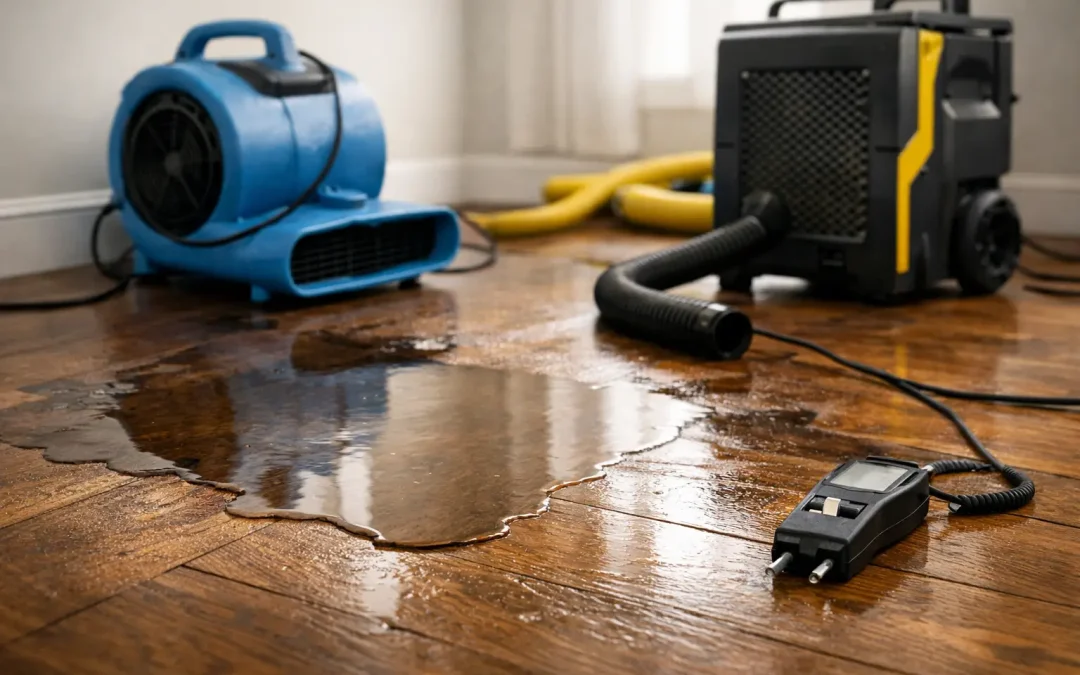
A dishwasher leak can travel beneath hardwood flooring long before a homeowner sees more than a damp edge or a slightly darker board. Knowing how to dry water damaged hardwood quickly can make the difference between saving a floor and facing cupping, buckling, mold growth, or replacement. In Tampa Bay, warm temperatures and high humidity can slow evaporation and make a small water event more serious than it first appears.
Hardwood is durable, but it is not waterproof. Water can enter through seams, floor vents, trim gaps, unfinished edges, and openings around cabinets or appliances. The goal is not simply to make the surface feel dry. The goal is to remove moisture from the wood, the subfloor, and any affected materials below before the floor changes shape or supports microbial growth.
Start Drying Water Damaged Hardwood Right Away
Safety comes first. If water is near electrical outlets, appliances, or a damaged ceiling, avoid the area until it can be safely assessed. Stop the source of water if possible, whether that means shutting off a supply valve, turning off an appliance, or placing a temporary cover over a roof leak.
If the water is from a clean source, such as a supply-line leak or rainwater that has not traveled through contaminated materials, begin removing it immediately. For water from a toilet overflow, sewage backup, floodwater, or another potentially contaminated source, avoid attempting a standard cleanup. Those situations require proper protective measures, disinfection, and professional restoration procedures.
For a clean-water event, take these immediate steps:
- Remove standing water with towels, a wet vacuum, or extraction equipment. Do not leave wet rugs, boxes, furniture pads, or other materials on the floor.
- Move furniture away from the affected area when it can be done safely. Place protective blocks beneath legs only after the floor is no longer holding surface water.
- Increase air movement with fans and use a dehumidifier to lower indoor humidity. Air conditioning can help, but it is rarely enough on its own after a significant leak.
- Open access to the affected area by removing wet rugs and, when appropriate, lifting shoe molding or baseboards so moisture is not trapped along the perimeter.
Avoid using high heat directly on the floor. Space heaters, heat guns, and overly aggressive drying can cause the top of the wood to dry faster than the underside. That uneven drying may worsen cracking, checking, or gaps between boards.
Why Hardwood Floors Change After Water Exposure
Wood absorbs moisture and expands across its width. When only the top or bottom of a board gets wet, the board can distort as one side expands more than the other. Cupping occurs when the edges of a plank rise higher than its center. Crowning is the opposite, with the center rising above the edges. If moisture remains trapped below the floor, boards may buckle or pull away from the subfloor.
Engineered hardwood can also be affected. Its layered construction may offer more stability than solid wood, but excess moisture can still damage the veneer, weaken adhesive, or cause layers to separate. Laminate and wood-look flooring require a different response because water can swell the fiberboard core and permanently damage joints.
Visible changes do not always happen on day one. A floor may look acceptable after a leak, then develop cupping several days later as moisture migrates through the wood. That is why drying should be based on moisture conditions, not appearance alone.
Surface Dry Does Not Mean the Floor Is Dry
Water often moves under flooring through seams and along the subfloor. A towel may dry the top of the boards while moisture remains beneath them. In a kitchen, water can travel under toe kicks and cabinets. In a living room, it can spread under an area rug and into adjacent rooms before it becomes visible.
Professional moisture meters help identify where water has traveled and whether the wood is returning to a normal moisture range. Technicians can compare affected areas with dry, unaffected flooring in the same property. This gives a more reliable picture than waiting to see whether boards begin to warp.
When to Call for Professional Hardwood Drying
A small spill that is cleaned up immediately may only need ventilation and monitoring. A larger event should be evaluated promptly, especially if water sat for more than a few hours, entered through seams, reached multiple rooms, or came from a hidden plumbing leak.
Professional help is strongly recommended when you notice standing water, swollen boards, dark staining, a musty odor, loose flooring, dampness around baseboards, or water coming from beneath cabinets. It is also wise to call when the floor feels dry but the leak occurred under an appliance, behind a wall, or in an area with limited airflow.
For rental-property owners and property managers, a documented inspection is particularly helpful. Quick action can limit tenant disruption, protect the building materials, and establish what was affected before repairs begin. Commercial properties may also need a coordinated plan that contains the damage while keeping entrances, offices, or customer areas as accessible as possible.
A trained restoration team can extract water, inspect the moisture path, set drying equipment, and monitor progress. Depending on the construction and extent of damage, drying may involve air movers, dehumidifiers, controlled floor-drying systems, and targeted access beneath trim or affected materials. The right setup depends on the type of hardwood, how it was installed, the amount of water, and whether the subfloor is concrete, plywood, or another material.
Do Not Sand or Refinish Too Soon
One of the most costly mistakes after water damage is sanding a cupped floor before it has fully dried. Sanding can flatten the raised edges temporarily, but if moisture remains below the surface, the boards may later crown as they continue drying. The floor may then need additional sanding or replacement.
Give the hardwood time to reach a stable moisture level before making cosmetic repairs. Some floors return close to their original shape after thorough, controlled drying. Others may retain staining, gaps, finish damage, or permanent distortion. An experienced assessment helps separate floors that can be dried and restored from those that need selective board replacement or more extensive repair.
The finish matters, too. Water can turn clear finishes cloudy or white, especially when moisture becomes trapped beneath the coating. Dark stains may indicate water reacted with tannins in the wood or that metal fasteners were affected. Refinishing may improve some of these issues, but it should be considered only after the underlying materials are dry and stable.
Protect the Rest of the Home While the Floor Dries
Water damage is rarely limited to the boards you can see. Check nearby baseboards, drywall, cabinets, area rugs, and upholstered furniture. If water reached an HVAC return, closet, or wall cavity, moisture may have moved farther than expected.
Keep indoor humidity as low and consistent as practical during drying. Tampa Bay homes can face heavy outdoor humidity, so leaving windows open may sometimes introduce more moisture instead of helping. A controlled indoor environment, combined with proper dehumidification and airflow, is usually more effective.
Do not reinstall rugs or place heavy furniture back on the floor until moisture readings and the floor condition indicate it is safe. Covering a damp floor can trap moisture again and undo the progress already made.
A Faster Response Gives Hardwood a Better Chance
Water-damaged hardwood does not automatically need replacement, but it does require a measured response. The sooner standing water is removed and hidden moisture is located, the better the opportunity to preserve the floor, reduce repair costs, and avoid avoidable disruption.
Superior Tile & Carpet Care provides local water-damage response and specialized floor restoration support for Tampa Bay homes and businesses. When a leak, overflow, or flood affects hardwood, timely inspection and controlled drying offer the clearest path toward protecting the flooring you worked hard to maintain.