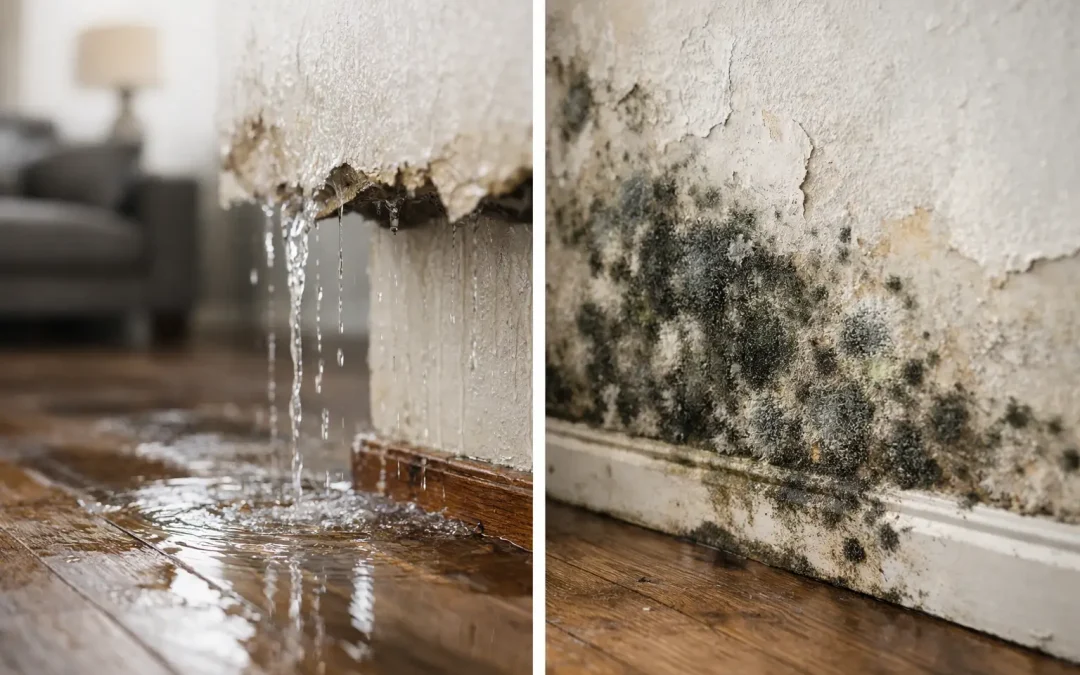
A slow leak beneath a kitchen sink can look harmless until the cabinet base swells, the room develops a musty odor, and dark spotting appears along the wall. So, does water damage cause mold? It can, and in Tampa Bay’s warm, humid climate, the window for preventing it may be much shorter than many property owners expect.
Mold is not automatically present after every spill or leak. It needs moisture, a food source, and enough time to establish itself. Unfortunately, many common building materials – carpet backing, drywall paper, wood framing, insulation, upholstery, and dust – can provide what mold needs once water is left in place. Fast drying is the difference between a manageable water cleanup and a more involved restoration project.
Does Water Damage Cause Mold Every Time?
Water damage creates the conditions for mold growth, but it does not guarantee that mold will develop. A small amount of clean water that is removed promptly from a nonporous surface may never become a mold problem. For example, drying a tile floor after an overflowing bathtub is very different from discovering that water has been soaking into carpet padding and drywall for several days.
The risk rises when moisture reaches hidden or absorbent materials. Water can travel under flooring, behind baseboards, into wall cavities, and beneath cabinets. The visible wet area may be only part of the problem. Even when a room looks dry, materials below the surface can retain enough moisture to support mold growth.
Mold can begin growing in as little as 24 to 48 hours under favorable conditions. That does not mean every damp carpet will show visible mold within two days. It does mean waiting for a smell or discoloration before acting is not a reliable plan. By the time those signs appear, moisture may have already affected more of the structure or contents than expected.
Why Florida Water Damage Needs a Fast Response
Tampa Bay properties deal with conditions that make drying more complicated: heavy rain, hurricane-season flooding, high outdoor humidity, plumbing failures, roof leaks, and air-conditioning condensation. Humid air slows natural evaporation, particularly in closed homes, vacant rentals, storage rooms, and commercial spaces that are not operating at normal temperatures.
A homeowner may run fans after a leak and feel reassured when the surface is dry. Fans can help, but they do not confirm that carpet padding, subflooring, wall cavities, or insulation have reached a safe moisture level. Professional restoration teams use moisture detection tools, controlled air movement, dehumidification, and monitoring to dry materials thoroughly rather than simply drying what is visible.
This matters for property managers and business owners as well. A minor leak in an office, retail space, apartment, or common area can interrupt operations and create complaints long before visible damage becomes obvious. Addressing the moisture source and drying affected materials quickly helps limit downtime, protect finishes, and preserve a safer indoor environment.
The Water Damage Situations Most Likely to Lead to Mold
Not all water events carry the same level of risk. A clean-water supply line leak may be easier to address if it is caught immediately. Water from a roof leak can bring in dirt and keep materials wet through repeated rain. Floodwater, sewage backups, and water from a contaminated drain demand a different level of caution because they may contain bacteria and other contaminants in addition to creating mold conditions.
Pay close attention after these situations:
- A burst pipe, failed appliance hose, or water-heater leak that wets flooring, walls, or cabinets.
- A roof leak or storm intrusion that affects ceilings, insulation, or attic materials.
- An overflowing toilet, backup, or floodwater event that introduces contaminated water.
- A carpet or rug that remains damp after extraction, cleaning, or a plumbing incident.
- Ongoing condensation around air-conditioning equipment, windows, or poorly ventilated bathrooms.
The longer water remains, the more decisions may be needed. Some materials can be dried and restored. Others, including heavily saturated padding, insulation, or damaged drywall, may need to be removed to prevent moisture from remaining trapped behind finished surfaces.
Signs Mold May Be Developing After Water Damage
A musty or earthy odor is one of the earliest warnings that moisture has lingered too long. You may also notice discoloration, peeling paint, warped baseboards, bubbling flooring, soft drywall, or carpet that feels damp or develops a recurring odor. These signs should not be ignored simply because the original leak has stopped.
Visible mold can range from small specks around a window or under a sink to widespread growth concealed behind flooring or walls. Color alone does not identify the type of mold or determine the level of concern. What matters first is correcting the moisture issue and having the affected area assessed appropriately.
People respond differently to mold and damp indoor conditions. Some may notice irritation or allergy-like symptoms, while others may not have an immediate reaction. Because symptoms are not a dependable way to evaluate a property, it is better to focus on the facts: Is there a moisture source? Were absorbent materials wet? Were they dried quickly and completely?
What to Do Immediately After a Leak or Flood
Your first priority is safety. If water is near electrical outlets, appliances, or the electrical panel, avoid entering the area until it is safe to do so. For a major leak, turn off the water supply if you can do it safely and contact the appropriate plumbing or emergency service.
For a small clean-water event, remove standing water as soon as possible, move furniture and belongings away from the wet area, and increase ventilation where practical. Do not assume household fans alone will solve a large carpet, wall, or cabinet saturation issue. The goal is not just to make the room feel dry. The goal is to remove moisture from the materials that absorbed it.
Avoid disturbing suspected mold growth or trying to paint over it. Painting can conceal staining, but it does not correct the underlying moisture. Likewise, strong fragrances may cover an odor temporarily without resolving the source.
For contaminated water, significant flooding, or water that has affected multiple rooms, professional help is the safer choice. These projects may require extraction, sanitation, removal of affected materials, drying equipment, moisture monitoring, and careful handling of contents. A licensed, insured restoration provider can help determine what can be cleaned and restored and what should be replaced.
When Professional Water Restoration Makes Sense
Calling for professional water restoration is especially wise when water has been present for more than a day, soaked carpet or padding, entered walls or cabinets, come from a sewage backup, or caused a persistent odor. It is also appropriate when you are unsure where the water traveled. Hidden moisture is a frequent reason seemingly small incidents become costly repairs later.
At Superior Tile & Carpet Care, trained technicians can respond to water and flood damage with professional extraction, drying, cleaning, and restoration services tailored to the affected materials. The approach should be practical: stop the damage from spreading, identify moisture that cannot be seen, protect salvageable flooring and furnishings where possible, and help return the space to a clean, usable condition.
There are trade-offs in every restoration decision. Drying and saving a quality hardwood floor, area rug, or commercial carpet may be worthwhile when the material and contamination level allow it. In other situations, removal is the responsible option because moisture or contamination has reached layers that cannot be safely or reliably restored. A proper assessment gives you a clearer basis for that choice.
Protecting Your Property After the Drying Is Done
Once the affected area is dry, keep an eye on it for several weeks. Watch for returning odors, new stains, lifted flooring, or changes around baseboards and cabinets. Repair the source of the water problem, whether that is a plumbing connection, roof issue, appliance failure, drainage concern, or condensation problem.
Routine maintenance also reduces the chance that small moisture problems turn into larger ones. Check under sinks and behind appliances, keep bathrooms ventilated, address roof leaks promptly, and schedule professional cleaning when carpets, upholstery, or rugs have been exposed to significant moisture. Clean materials are easier to inspect, and removing trapped soil and residue supports a healthier indoor environment.
Water damage does not have to become a mold problem. The most helpful step is acting before the room looks or smells worse: remove the water, dry the affected materials thoroughly, and get qualified help when moisture has reached beyond the surface.