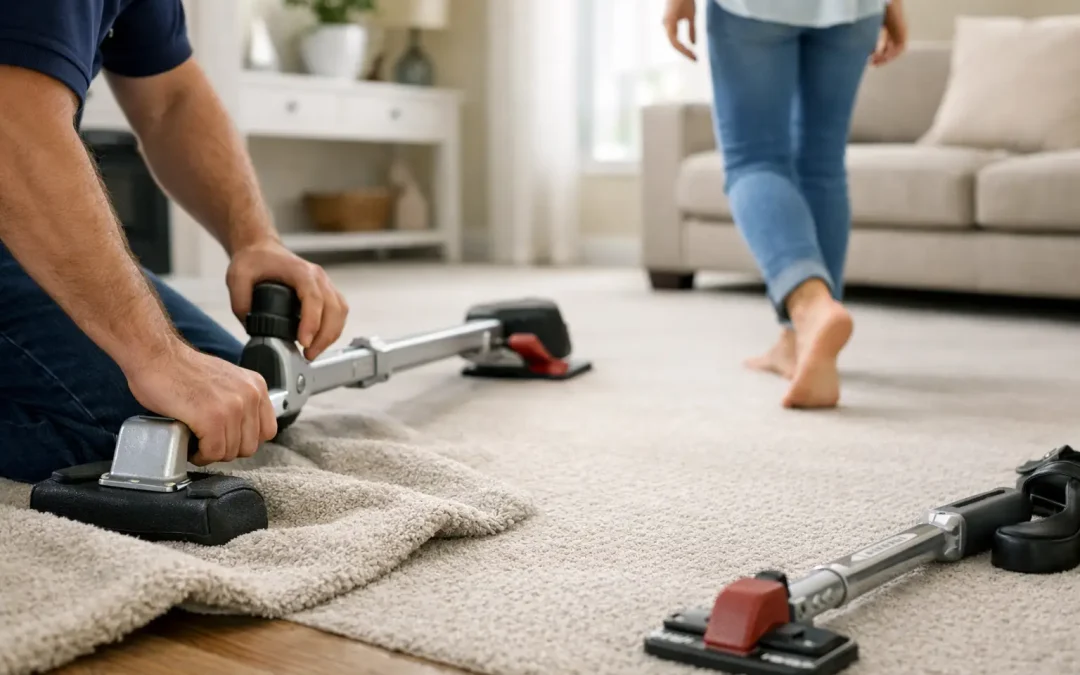
A carpet ripple can start as a minor nuisance near a doorway or along the edge of a room. Before long, it can catch a shoe, disrupt a rolling office chair, or make an otherwise clean space look poorly maintained. Professional carpet stretching corrects loose carpet at its source, restoring the smooth, secure appearance your floors were meant to have.
For Tampa Bay homeowners, rental-property owners, and business managers, this is more than a cosmetic repair. Loose carpet can create a trip hazard, accelerate wear, and make cleaning less effective. Addressing it early may help protect the flooring investment already under your feet.
What Carpet Stretching Actually Fixes
Carpet is installed under tension and secured around the perimeter of a room using tack strips. When that tension weakens, excess material begins to show up as waves, ripples, buckles, or loose areas. Carpet stretching removes the slack, pulls the carpet back into proper position, and re-secures it along the room’s edges.
The goal is not simply to flatten a visible wrinkle. A proper repair evaluates the carpet, padding, seams, transitions, and perimeter attachment points. If the carpet is reattached without removing the underlying slack, the problem may return quickly.
Stretching is often an effective solution when the carpet itself is still in good condition but no longer lies flat. It may not be the right answer when the carpet backing has deteriorated, extensive moisture damage is present, or the material is badly worn. An experienced technician can help identify the difference before you spend money on a repair that will not last.
Common signs your carpet needs attention
Ripples are the clearest sign, but they are not the only one. You may notice a raised line running across an open room, carpet that shifts slightly when walked on, corners pulling away from the wall, or seams beginning to look stressed. In commercial settings, loose areas often appear first in busy walkways, reception areas, conference rooms, and places where chairs roll frequently.
A carpet that suddenly develops large buckles after a leak, flood, or plumbing issue deserves prompt attention. Moisture can affect the carpet, pad, backing, subfloor, and adhesive conditions. In that situation, drying and restoration should come before a decision about stretching.
Why Carpet Becomes Loose in Tampa Bay Homes and Businesses
Carpet can loosen for several reasons, and Florida’s heat and humidity can add to the challenge. Changes in indoor temperature and moisture levels may cause carpet materials and backing to expand and contract. Over time, that movement can reduce the original installation tension.
Heavy foot traffic is another common contributor. Families, pets, furniture movement, and daily use gradually put stress on carpet fibers and backing. In offices, apartment common areas, and retail spaces, rolling chairs and repeated traffic patterns can make the issue more noticeable in specific lanes.
Improper installation is also a frequent cause. Carpet installed with a knee kicker alone instead of a power stretcher may look acceptable at first but may loosen earlier than expected. Insufficient perimeter attachment, weak seams, aging padding, and room additions or renovation work can also affect how well the carpet stays in place.
Water intrusion changes the conversation. A damp carpet may stretch or buckle, but simply tightening it is not always the safe next step. The area should be assessed for moisture, odor, contamination, and damage below the carpet. Quick professional response helps limit the risk of mold growth and more extensive floor restoration work.
How Professional Carpet Stretching Is Performed
A quality carpet repair begins with an inspection. The technician looks at where the ripples are forming, checks the carpet’s condition, and determines whether the perimeter, seams, padding, or tack strips need attention. Furniture may need to be moved to provide clear access, especially when the loose area extends beneath large pieces.
The carpet is carefully released from the tack strips where needed. A power stretcher is then used to apply controlled, even tension across the room. This matters because pulling only from one small area can create uneven stress, distort seams, or leave hidden slack elsewhere.
Once the carpet is properly tensioned, it is trimmed as needed and secured back onto the tack strips. The technician checks transitions at doorways, inspects seams, and confirms that the carpet lies flat. Depending on the room and the condition of the flooring, minor repairs to tack strips or transitions may be part of the job.
A room with one small ripple can sometimes be handled relatively quickly. Larger rooms, multiple loose areas, heavy furniture, damaged seams, or carpet affected by a water event require more time and a more careful scope of work. The right repair depends on the cause, not just the appearance of the ripple.
Why a Knee Kicker Is Not a Long-Term Fix
Many property owners have seen a knee kicker used during carpet installation. It is a useful hand tool for positioning carpet along a wall or in a tight area, but it is not designed to create the full-room tension necessary for most stretching repairs.
Trying to correct broad ripples with a knee kicker can leave slack in the middle of the room. It can also strain the carpet backing, damage a seam, or cause the looseness to return. DIY attempts may be tempting for a small area, particularly before a move-out inspection or property showing, but the cost of redoing a poor repair can outweigh the savings.
Professional equipment and trained technique matter most with patterned carpet, Berber styles, older carpet, rooms with multiple seams, and commercial installations. These materials and conditions require careful handling to avoid visible distortion or damage.
When Stretching Can Save You From Replacement
Replacing carpet is sometimes necessary, but ripples alone do not automatically mean the floor has reached the end of its service life. If the fibers are in reasonable condition, the backing remains sound, and there is no unresolved moisture problem, stretching can extend the usable life of the carpet.
That can be particularly helpful for rental homes and commercial properties. A smooth, clean carpet helps a unit or business space look cared for without committing to a full replacement project. For a homeowner planning to sell, stretching and professional cleaning can also improve the presentation of rooms that have been well maintained but look tired because of loose carpet.
Still, there are limits. Carpet with widespread staining, odors that have penetrated the pad, crumbling backing, major seam failure, or damage from prolonged water exposure may be a better candidate for replacement. A reliable service provider should explain those trade-offs clearly rather than recommending a repair that does not serve the property well.
Pairing Carpet Repair With Cleaning and Restoration
Carpet stretching is often most effective when it is part of a broader floor-care plan. Once ripples are removed, professional cleaning can reach the carpet more evenly and leave the room looking more consistent. If the carpet has pet-related odor, traffic soil, or spots around the loose area, addressing those concerns at the same time can make the repair feel like a true refresh rather than a temporary correction.
After water damage, the order of service is especially important. Moisture must be identified and addressed first. Carpet, padding, and the subfloor may need drying, sanitation, repair, or removal depending on the source and duration of the water exposure. Stretching comes later, after the area is stable and appropriate for repair.
Superior Tile & Carpet Care approaches floor concerns with that larger picture in mind. A loose carpet may be a straightforward repair, or it may point to cleaning needs, installation issues, or moisture conditions that deserve a closer look.
Protecting Carpet After It Has Been Stretched
After the repair, avoid dragging heavy furniture across the carpet. Use furniture sliders when moving large pieces, and consider protective mats in areas with rolling office chairs. Regular vacuuming helps remove abrasive dry soil that can wear down fibers, while periodic professional cleaning supports a healthier, better-kept appearance.
For rental properties and commercial facilities, routine walk-throughs can catch early ripples before they become safety concerns. Check hallways, doorways, open gathering spaces, and high-traffic work areas. A small wave noticed early is generally easier to address than a room full of loose carpet.
If your carpet is rippling, lifting at the edges, or showing new buckles after a water event, do not wait for the problem to become a fall risk or a larger flooring repair. A timely inspection can give you a clear answer and help your space return to the clean, secure condition people notice when they walk in.