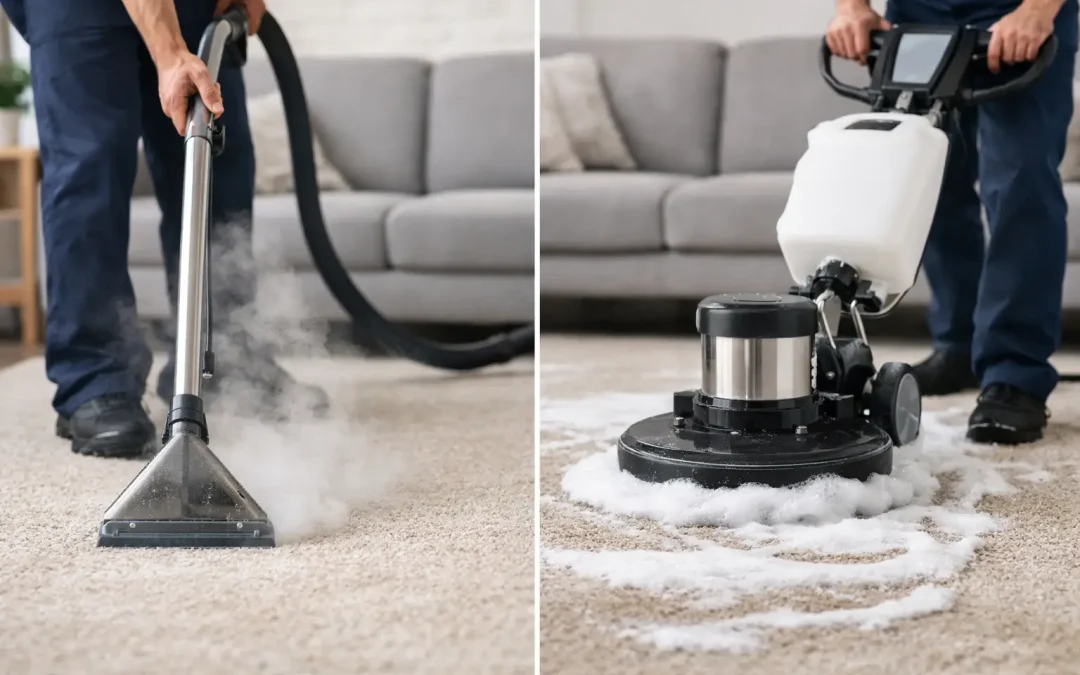
A carpet can look clean at first glance while holding tracked-in soil, pet residue, spilled drinks, and humidity-related odors below the surface. That is why steam cleaning versus shampooing carpets is more than a question of which method looks better after an appointment. The right choice affects how thoroughly soil is removed, how quickly the carpet dries, and how well the fibers hold up over time.
For Tampa Bay homes, rentals, offices, and common areas, the decision also has a local factor: Florida humidity can make slow drying a bigger concern. A professional cleaning plan should match the carpet’s condition, fiber type, traffic level, and any concerns about spots, odors, or water exposure.
Steam Cleaning Versus Shampooing Carpets: The Main Difference
The term steam cleaning is commonly used for hot water extraction. Professional equipment applies a controlled solution of hot water and cleaning agents into the carpet, then immediately extracts that solution along with loosened dirt, allergens, and residue. The equipment does not typically fill a room with literal steam. Instead, it uses heated water, agitation, and strong recovery to clean deep into the carpet pile.
Carpet shampooing uses a foaming or detergent-based solution that is worked into the carpet to break up soil. In traditional shampooing, the carpet is then brushed or agitated and allowed to dry before being vacuumed. The process can improve appearance, particularly on heavily soiled commercial carpeting, but it may leave more cleaning product behind if it is not carefully rinsed and extracted.
The distinction matters because leftover residue can attract new soil. A carpet may initially look bright after shampooing, then begin to look dull again sooner than expected if detergent remains in the fibers. Modern professional shampoo products and low-moisture systems can reduce that concern, but technique and equipment still make a significant difference.
When Hot Water Extraction Is the Better Choice
Hot water extraction is often the preferred method for residential carpet that needs a deeper reset. It is particularly useful after frequent family traffic, pet accidents, food spills, or a long gap between professional cleanings. The combination of heat, cleaning solution, and extraction helps remove embedded soil rather than only improving the surface appearance.
It is also a strong option when odor is part of the problem. Pet odors, body oils, moisture, and everyday household contaminants can settle into carpet backing and padding. Depending on the source and severity, treatment may need to include an odor-neutralizing product before or during extraction. Surface deodorizer alone may make the room smell better temporarily without solving what is underneath.
For rental-property owners and property managers, extraction can help restore a unit between tenants when carpet is structurally sound but visibly soiled. It can also provide a clearer picture of the carpet’s actual condition. Once heavy soil and residue are removed, permanent stains, wear patterns, bleach spots, or damaged seams are easier to identify.
That said, hot water extraction is not automatically the answer for every carpet. Excessive moisture, poor extraction, or improper cleaning products can create problems, especially if a carpet has weak backing, pre-existing water damage, or installation issues. Certified technicians assess those risks before selecting the process.
Drying Time in Tampa Bay Conditions
A professionally extracted carpet commonly dries within several hours, though conditions vary. Carpet thickness, airflow, indoor humidity, soil level, and the amount of treatment required all affect drying time. In humid weather, turning on air conditioning, running ceiling fans, and keeping reasonable airflow in the space can help.
The goal is not simply to add water and hope it dries. Professional-grade extraction equipment removes a substantial amount of the cleaning solution during the service. This is one reason a trained technician and proper equipment matter more than the label on a rented machine.
When Shampooing May Make Sense
Shampooing can be appropriate in certain commercial and maintenance settings, especially where a carpet needs appearance management and downtime must be limited. Low-moisture shampoo or encapsulation methods may be used on some commercial carpet styles to lift surface soil with less water than traditional extraction.
This approach can be helpful for offices, retail spaces, hallways, and other areas that need to return to service quickly. A low-moisture process may also be considered for carpet that cannot tolerate extended drying time. However, it is generally most effective as part of a regular maintenance program, not as a substitute for periodic deep cleaning.
There is an important trade-off. Shampooing and low-moisture cleaning can deliver quicker access to the space, but they may not remove deep contamination as thoroughly as well-performed hot water extraction. In a busy lobby or office corridor, that trade-off may be reasonable. In a home with pets, young children, recurring odors, or heavily tracked soil, a deeper method often delivers more lasting results.
Residue, Re-Soiling, and Why Technique Matters
People sometimes describe a carpet as getting dirty faster after it was cleaned. The carpet itself is not causing the problem. More often, residual detergent, incomplete soil removal, or heavy ongoing traffic is involved.
Shampooing has historically been associated with re-soiling because some methods left a noticeable amount of product in the carpet. That does not mean every shampoo-based service will cause residue, but it does mean the cleaner must use the right amount of product and follow the process with proper removal or vacuuming.
Hot water extraction can also leave residue if too much chemical is used or if the carpet is not rinsed and recovered correctly. The method is only as good as the technician’s process. Safe, green cleaning solutions, measured application, and strong extraction help protect carpet fibers while reducing sticky buildup.
At Superior Tile & Carpet Care, the focus is on selecting a process that addresses the actual condition of the flooring rather than applying the same method to every room. That starts with inspecting the carpet, identifying the fiber and construction when possible, and discussing concerns such as pets, stains, allergies, tenant turnover, or previous water intrusion.
Stains and Odors Need More Than One Cleaning Method
Neither steam cleaning nor shampooing can erase every stain. Some discoloration is permanent because it has changed the carpet’s dye, not simply coated the fiber. Bleach, certain medications, plant fertilizers, and some acidic spills can create color loss that cleaning cannot reverse.
Other stains respond well when treated promptly. Protein-based spots, food spills, pet accidents, and oily residues each require different spotting agents and techniques. Applying the wrong store-bought cleaner can set a stain, damage fibers, or leave a residue that complicates professional treatment later.
Odor is equally specific. A musty smell after a plumbing leak or storm-related water intrusion should not be treated as a routine carpet-cleaning issue. Moisture may have reached the backing, padding, subfloor, or wall base. In those cases, prompt water-damage assessment and drying are more appropriate than shampooing over the problem. Fast action can help limit mold risk and protect the flooring system.
How to Choose the Right Carpet-Cleaning Method
Start with the reason you are cleaning. If the carpet has embedded dirt, pet-related odor, sticky residue, or visible traffic lanes, hot water extraction is usually the stronger candidate. If the goal is short drying time and routine appearance maintenance in a commercial setting, low-moisture shampooing may be practical.
Then consider the carpet itself. Wool, delicate area rugs, older carpet, loose seams, and heavily worn fibers may require a modified approach. Fine fabrics and specialty rugs should never be treated as standard wall-to-wall carpet without an evaluation. The wrong heat level, product, or agitation can create shrinkage, color bleeding, or texture changes.
Finally, consider the building’s use. A homeowner may be able to keep a room clear while carpet dries. A medical office, retail space, apartment turnover, or hotel common area may need scheduling that reduces disruption. A qualified local cleaning provider can coordinate the cleaning process around those practical realities.
Protecting Results After Cleaning
After professional cleaning, regular vacuuming is the simplest way to extend the result. Dry soil acts like fine grit underfoot, gradually wearing away carpet fibers. Entry mats, prompt spot treatment, and a no-shoes policy in high-use rooms can also make a noticeable difference.
Avoid over-the-counter shampoos that create heavy foam unless the manufacturer specifically approves them for your carpet and machine. More product does not equal a cleaner carpet. It often means more residue to remove later.
A clean carpet should feel comfortable, look refreshed, and support a healthier, more presentable indoor space. Whether the best fit is hot water extraction or a low-moisture shampoo process, the useful choice is the one that removes the right problem while respecting your carpet, your schedule, and the conditions in your property.