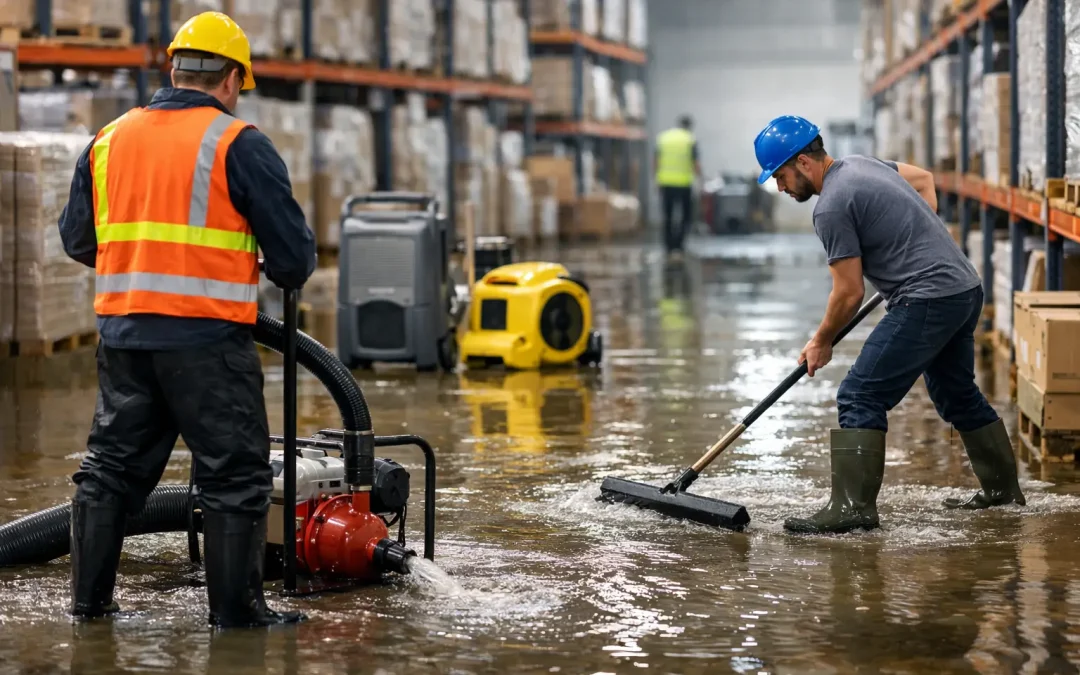
A few inches of water across a warehouse floor can interrupt far more than one shift. It can damage stored goods, weaken cartons, affect electrical equipment, create slip hazards, and leave moisture trapped beneath flooring or inside wall systems. Effective warehouse flood recovery begins with quick decisions, but it should not become a rushed cleanup that overlooks safety or hidden damage.
For Tampa Bay warehouses, distribution centers, storage facilities, and commercial properties, flooding may follow heavy rain, roof leaks, plumbing failures, sprinkler discharge, or equipment malfunctions. The source and category of water matter. So do the type of flooring, the location of inventory, and how long water has been present. A professional response helps protect the building, the people working in it, and the ability to reopen with confidence.
Start With Safety, Not Cleanup
Before employees move boxes, run fans, or attempt to mop standing water, the affected area should be evaluated for immediate hazards. Water can reach electrical outlets, machinery, extension cords, forklift charging areas, and low-mounted equipment. If electrical exposure is possible, power should be shut off to the affected zone by a qualified person before work begins.
Access should also be controlled. Wet concrete, tile, vinyl, and coated floors become extremely slippery, especially when traffic brings in dirt or oil. Mark off the area, keep unnecessary personnel out, and document visible damage before materials are moved. Photos and written notes can support insurance reporting and help establish which inventory, fixtures, and floor areas were affected.
Not every water event presents the same health concern. Clean water from a supply line usually requires a different approach than water from a drain backup, stormwater intrusion, or an unknown source. When water may be contaminated, employees should not handle affected porous materials without proper protective equipment and a defined cleanup plan.
The First Hours of Warehouse Flood Recovery Matter
The main goal in the first hours is to stop additional water from entering the facility and remove standing water as efficiently as possible. That may mean shutting off a leaking supply line, placing temporary protection below a roof leak, or coordinating with building management after a storm event. Once the source is controlled, extraction should begin.
Professional extraction equipment removes far more water than mops, shop vacuums, or basic fans alone. This matters because surface dryness can be misleading. Water often travels under pallets, behind shelving, beneath vinyl flooring, into carpet backing, through expansion joints, and along wall edges. The longer moisture remains, the greater the risk of odor, material deterioration, microbial growth, and delayed floor failure.
Inventory should be moved only after it has been assessed and documented. Dry, unaffected stock may be relocated to a protected area. Damp cartons, paper products, food-related goods, and other absorbent materials need closer review because the packaging itself may compromise the product. When in doubt, keep questionable inventory separate until the appropriate internal team, insurer, or product authority determines whether it can remain in service.
Dry the Structure, Not Just the Floor Surface
A warehouse can look dry while moisture remains inside concrete, wallboard, insulation, base materials, wood components, and floor assemblies. That is why reliable warehouse flood recovery relies on measured drying rather than appearance alone.
Restoration technicians use moisture meters, thermal imaging when appropriate, and humidity readings to identify where water has traveled. These measurements guide the placement of air movers, dehumidifiers, and other drying equipment. The equipment plan depends on the size of the loss, ceiling height, ventilation, affected materials, and whether the facility can remain partially operational.
Concrete floors deserve particular attention. Concrete is durable, but it is porous and can hold moisture after a flood. Excess moisture may affect coatings, adhesives, carpet tiles, vinyl flooring, wood-based shelving components, and future repairs. A floor that is reopened too soon may develop peeling, discoloration, odor, or adhesive issues weeks later.
Flooring Requires a Material-Specific Decision
Tile floors may withstand water better than many surfaces, but grout lines, baseboards, and the area below the tile can still hold moisture. Luxury vinyl plank and sheet vinyl can trap water beneath the surface, particularly near seams and perimeter edges. Carpet and padding may sometimes be dried after a clean-water event, but the decision depends on how long they were wet, the contamination level, and the condition of the materials.
Wood products are especially sensitive. Water can cause cupping, warping, swelling, and finish damage. The right response may involve controlled drying, cleaning, repair, or replacement. Trying to force-dry wood with excessive heat can create additional damage, so this is an area where experienced restoration guidance is valuable.
Protect Operations While the Facility Recovers
A full shutdown is not always necessary, but partial operation should be planned carefully. The safest option depends on the scope of water damage, the location of affected areas, the type of inventory handled, and whether there are sanitation or regulatory requirements for the business.
Create a clear separation between the recovery area and normal operations. Temporary barriers, alternate travel routes, marked equipment lanes, and restricted access help reduce safety risks. If forklifts or other machinery need to move through nearby areas, keep cords, hoses, and drying equipment protected from traffic.
Communication also prevents confusion. Employees should know which areas are off-limits, where inventory has been moved, who is responsible for updates, and how to report odors, damp materials, or new signs of water. A short, consistent communication plan is often more useful than asking staff to make judgment calls during a stressful cleanup.
For larger losses, keep records of extraction, drying readings, equipment placement, materials removed, and repairs completed. Good documentation supports insurance claims and provides a useful maintenance record for property managers and facility owners.
Cleaning and Sanitizing After Water Damage
Once extraction and structural drying are underway, affected hard surfaces need professional cleaning. Floodwater can leave behind dirt, residue, salts, oils, and contaminants that ordinary sweeping will not remove. Even clean-water incidents can leave a warehouse floor slick or dull if residue is allowed to dry in place.
The cleaning method should fit the surface and the water source. Tile and grout may need deep cleaning to remove embedded soil. Concrete may require specialized cleaning before a coating or repair is considered. Carpeted office areas, rugs, upholstery, and fabric partitions may require separate assessment and treatment.
When sanitation is needed, the product and process should be selected for the actual conditions, not applied as a one-size-fits-all solution. Green cleaning products can be part of a responsible recovery plan when they are appropriate for the surface and cleaning objective. The priority is a clean, safe environment without causing unnecessary damage to finishes, flooring, or indoor air quality.
When to Call a Professional Restoration Team
A small, contained spill may be manageable in-house if it is clean water, caught immediately, and limited to a nonporous surface. A warehouse flood is different when water reaches inventory, enters wall systems, spreads beneath flooring, affects multiple rooms, or has an uncertain source.
Professional help is especially important when there is contaminated water, a large extraction need, visible floor damage, persistent humidity, odor, or concern about reopening before the facility is fully dry. Certified technicians bring commercial-grade extraction and drying equipment, moisture monitoring, surface-specific cleaning knowledge, and the ability to coordinate the work around active business operations.
Superior Tile & Carpet Care provides emergency water and flood damage restoration for Tampa Bay commercial properties, with trained technicians focused on protecting floors, interiors, and the people who rely on the facility. As a licensed and insured local company, the team can address both immediate water removal and the floor cleaning, repair, or restoration needs that may follow.
Build a Better Plan Before the Next Storm
The best time to prepare for a warehouse water emergency is before water reaches the floor. Review roof and drain maintenance, inspect plumbing connections and sprinkler components, keep inventory elevated where practical, and identify where water shutoffs are located. Store emergency contacts where managers can reach them after hours.
It also helps to know which materials in the building are most vulnerable. A facility with polished concrete and metal racking has different recovery priorities than one with carpeted offices, vinyl flooring, wood fixtures, and sensitive stored products. A simple written response plan can save valuable time when the pressure is on.
After the water is gone, do not let a dry-looking floor be the final test. Measured drying, careful cleaning, and a clear reopening decision give your warehouse the best chance to return to normal without hidden moisture becoming the next disruption.