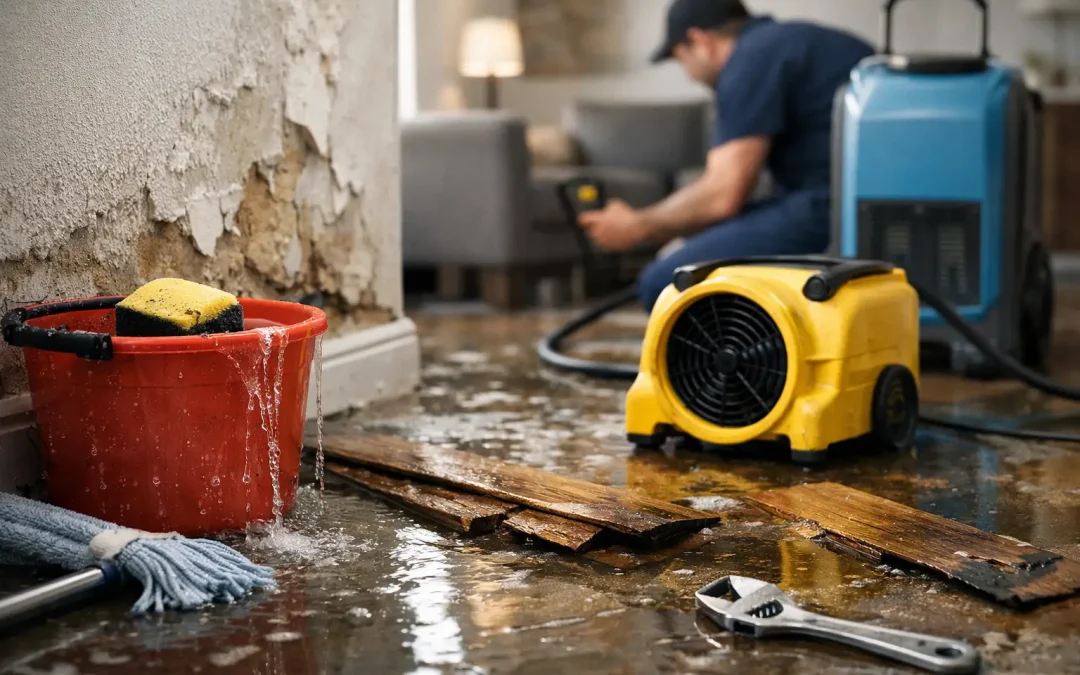
A burst supply line behind a bathroom wall or rainwater entering through a roof leak can soak far more than the surface you can see. The top water damage restoration mistakes often happen in the first few hours, when property owners are understandably focused on removing visible water and getting life back to normal. In Tampa Bay’s humid climate, however, moisture left in carpet padding, baseboards, wall cavities, or subflooring can quickly become a much larger repair.
For homeowners, rental-property owners, and commercial managers, the goal is not simply to make a space look dry. It is to stop the source, protect people and belongings, document the loss, and fully dry affected materials before mold, odors, and structural damage take hold.
Waiting Too Long to Start Drying
Delaying action is one of the costliest mistakes after water intrusion. A small leak may seem manageable, especially if the floor looks dry after towels or a shop vacuum are used. But water moves into seams, under flooring, behind cabinets, and into porous materials. Carpet padding, drywall, insulation, and wood framing can hold moisture long after the visible puddle is gone.
Time matters because moisture conditions can support mold growth in as little as 24 to 48 hours. The exact risk depends on the amount of water, indoor temperature, ventilation, and materials affected, but waiting to assess the situation gives water more opportunity to spread.
Start by stopping the source if it is safe to do so. Shut off the local valve or main water supply for a plumbing leak, and keep people away from standing water near electrical outlets or equipment. Then arrange for professional extraction and drying as soon as possible. Emergency response is especially valuable when water reaches carpet, wood floors, luxury vinyl plank seams, drywall, or multiple rooms.
Treating Every Type of Water the Same
Not all water losses can be handled with the same cleanup approach. Clean water from a supply line is different from water that has passed through a dishwasher, washing machine, or overflowing toilet. Floodwater, sewage backups, and water that may contain contaminants require added safety measures and more extensive removal of affected materials.
Trying to save everything after contaminated water exposure can create a health concern. Porous items such as carpet padding, some upholstered furniture, insulation, and damaged drywall may not be safely restorable. A qualified restoration assessment helps determine what can be cleaned, what should be removed, and what documentation is needed for an insurance claim.
This is also why property owners should avoid handling suspected sewage or floodwater without proper protective equipment. Keep children, pets, tenants, customers, and employees out of the area until it has been evaluated and cleaned correctly.
Assuming Surface Dry Means Completely Dry
A dry-looking floor can be misleading. Water frequently travels below the finished surface, particularly around baseboards, under cabinets, through grout lines, and beneath carpeting. Wood may cup or buckle days later. Laminate and some floating floors can swell at the edges. Even durable tile floors can have trapped moisture beneath them if water reaches the subfloor.
Professional drying is based on measurement, not guesswork. Restoration technicians use moisture meters and other monitoring equipment to check materials that cannot be evaluated by touch alone. Extraction, air movement, dehumidification, and controlled drying work together to remove moisture from both surfaces and the air.
Running household fans can help in a minor, clean-water incident with limited affected materials. But it is not always enough, and it can be counterproductive if it spreads contaminated particles or moves moisture into unaffected areas. The right drying plan depends on the water source, square footage, building materials, and how long the water was present.
Leaving Wet Carpet Padding in Place
Carpet can sometimes be restored after a clean-water loss if it is addressed promptly. Padding is another matter. Because it is highly absorbent and difficult to dry thoroughly, wet padding often needs to be removed and replaced. Leaving it in place may lead to persistent odors, mold concerns, or moisture that transfers into the subfloor.
Do not pull up carpet and assume the job is finished. The subfloor still needs to be evaluated, cleaned when appropriate, and dried to an acceptable moisture level before new padding or flooring is installed. For rental properties and commercial spaces, this step helps prevent a recurring odor complaint or flooring failure weeks after tenants or customers return.
Area rugs, upholstered furnishings, draperies, and mattresses also need individual evaluation. Their construction, backing materials, dyes, and exposure type all affect whether professional cleaning and drying are appropriate.
Skipping Documentation for Insurance
When a leak or flood affects floors, walls, contents, or multiple rooms, documentation can make the claim process much smoother. Before cleanup begins, take clear photos and video of the source of water, standing water, damaged rooms, affected belongings, and any visible staining or swelling. Continue documenting conditions as work progresses.
Save invoices for emergency plumbing, extraction, drying, temporary repairs, and replacement materials. If you are a property manager, record tenant notices, access arrangements, and steps taken to protect the unit. Businesses should also document operational impacts and any affected inventory or equipment.
Do not delay emergency mitigation while waiting for an insurance adjuster if conditions are getting worse. Most policies expect owners to take reasonable steps to prevent additional damage. A professional restoration provider can provide organized records of the services performed and the equipment used, which may support the claim process.
Removing Equipment Before Drying Is Verified
Drying equipment can be noisy and inconvenient, particularly in an occupied home, hotel room, office, or retail setting. It is tempting to turn off air movers or dehumidifiers early, move them out of a busy area, or unplug them overnight. That shortcut can extend drying time and leave hidden moisture behind.
Equipment should remain in place until monitored readings show that affected materials have returned to an appropriate dry standard. This is not about running equipment longer than necessary. It is about confirming the job is actually complete. Proper monitoring can prevent repeat visits, lingering odors, and avoidable flooring or wall repairs.
If a space must remain operational, discuss practical options with the restoration team. In some cases, work can be staged by room, equipment can be positioned to preserve access, or drying can be scheduled around business hours. Safety and complete drying still need to guide the plan.
Hiring Based Only on the Lowest Price
Water damage restoration is not a service where the lowest initial quote always delivers the lowest final cost. An incomplete job can result in mold remediation, floor replacement, drywall repairs, or lost use of the property later. Look for a licensed and insured local provider with trained technicians, professional extraction and drying equipment, and a clear explanation of the proposed scope.
Ask how the provider will identify hidden moisture, handle contaminated water if present, protect unaffected areas, and document the drying process. It is also reasonable to ask about experience with the specific materials in your property, whether that is carpet, tile and grout, wood flooring, luxury vinyl plank, or fine furnishings.
At Superior Tile & Carpet Care, restoration work is approached as property preservation, not just water removal. The objective is to address the immediate emergency while helping protect the surfaces and indoor environment you rely on every day.
Avoiding the Same Problem Twice
Once the space is dry, identify why the loss occurred. A failed supply line may point to aging hoses or high water pressure. A recurring ceiling stain may signal a roof, plumbing, or HVAC condensate issue. Water near an exterior wall may indicate drainage problems, damaged seals, or storm-related intrusion.
Before replacing flooring or closing a wall, make sure the source has been repaired and affected materials have been properly dried. This is also a good time to inspect adjacent rooms and lower levels, since water can travel farther than expected.
Keep a simple emergency plan: know where the main shutoff valve is, keep a trusted plumber and restoration provider’s number available, and photograph valuable rooms periodically. A fast, measured response after water damage can protect your property, reduce disruption, and give you a clearer path back to a safe, usable space.