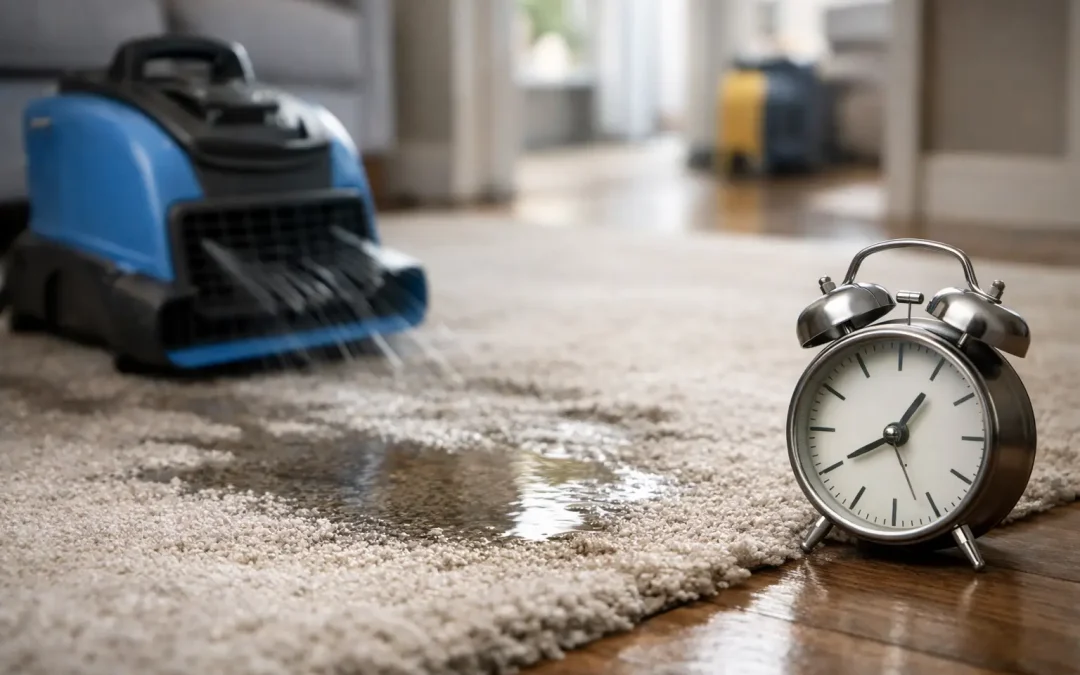
A soaked carpet can hold far more water than it appears to from the surface. In Tampa Bay, where heat and humidity can slow evaporation, wet carpet drying is a race against odors, mold growth, damaged padding, and weakened flooring beneath it. Whether the water came from a supply-line leak, overflowing appliance, roof intrusion, or flooding, the first day often determines whether a room can be restored or needs more extensive repair.
For homeowners, rental owners, and commercial property managers, the goal is not simply to make carpet feel dry underfoot. It is to remove moisture from the carpet, the pad, the subfloor, baseboards, and any affected wall materials before damage spreads.
Start Wet Carpet Drying With Safety
Before moving furniture or setting up fans, identify where the water came from. A clean-water event, such as a broken water supply line or an overflowing sink with no contaminants, may allow for a faster restoration response if addressed promptly. Water from a toilet, drain backup, outdoor flooding, stormwater, or a sewer line is a different situation. It may contain bacteria, chemicals, or other contaminants that make do-it-yourself cleanup unsafe.
Do not walk through standing water near outlets, power cords, or electrical equipment. Turn off electricity to the affected area only if it is safe to do so from a dry location. If water has reached electrical outlets, appliances, or walls, contact a qualified professional before restoring power.
If the source is a plumbing leak and you can safely stop it, shut off the local supply valve or the main water valve. For a roof leak, place containers under active drips if possible, but avoid climbing onto a wet roof during a storm. Stopping the source prevents the cleanup effort from being undone while you work.
The First 24 Hours Set the Direction
Water travels farther than most people expect. It can wick through carpet backing, soak the pad, reach adjacent rooms, and seep under baseboards. A carpet may look dry along the edges while the padding beneath remains saturated.
Begin by removing as much water as possible. A wet/dry vacuum can help with small clean-water spills, but it is not a substitute for professional extraction after a significant leak or flood. Standard household vacuums should never be used on wet carpet. They can create a shock hazard and may be permanently damaged.
Move lightweight furniture, rugs, boxes, and other belongings out of the affected area. Place aluminum foil, plastic tabs, or blocks beneath furniture legs that cannot be moved to reduce the chance of staining, rust transfer, or wood damage. Avoid dragging heavy furniture across wet carpet, since this can tear fibers and push moisture deeper into the pad.
Then focus on airflow and humidity. Open interior doors, run ceiling fans where safe, and use fans to move air across the carpet surface. Air conditioning and dehumidifiers are especially useful in Florida because outdoor air can already carry substantial moisture. Opening windows may help on a dry day, but during humid or rainy weather it can introduce more moisture and slow the drying process.
Why Surface Dryness Is Not Enough
Carpet can feel dry before the materials below it have dried. This is one of the most common reasons a water event later turns into a musty odor, carpet discoloration, or mold concern.
Most installed carpet sits over a pad. That pad acts like a sponge, especially if it is made from bonded foam. Once saturated, it may be difficult to dry thoroughly in place. Moisture can also penetrate the subfloor. Concrete slabs can retain moisture at the surface, while wood subfloors can swell, weaken, or develop staining if water remains trapped.
Professionals use moisture meters and specialized drying equipment to determine where water has traveled and whether materials have reached acceptable drying levels. This matters because guessing can lead to premature reinstallation of furniture, damaged flooring, or recurring odors weeks later.
Carpet, Pad, and Subfloor Need Different Decisions
Not every wet carpet requires replacement, and not every carpet can be saved. The right decision depends on the water source, how long materials remained wet, the amount of saturation, the carpet construction, and the condition of the pad and subfloor.
Clean water caught quickly may allow carpet to be extracted, lifted, dried, and reinstalled. In some cases, the pad can also be dried or replaced selectively. If the water is contaminated, if the carpet has been wet for too long, or if the pad is heavily saturated, removal is often the safer choice.
Commercial carpet tiles can offer a different path. Individual tiles may be lifted for drying or replaced without removing an entire floor. However, the concrete below still needs to be assessed, and adhesive failure can become a concern after prolonged moisture exposure.
Common Mistakes That Make Water Damage Worse
A quick response is valuable, but some well-intended steps create larger problems. Applying household cleaners, deodorizers, or large amounts of carpet shampoo to a wet carpet can add moisture and leave residue behind. Spraying fragrance over a musty smell does not address the water still trapped below the surface.
Using only a few small fans is another common mistake. Fans are useful, but effective drying requires the right balance of extraction, air movement, dehumidification, and temperature control. Too much uncontrolled heat can damage some carpet fibers, cause shrinkage, or affect nearby wood surfaces.
Homeowners should also avoid assuming that bleach is a universal mold solution. Bleach can discolor carpet, harm fabrics, and does not reliably solve hidden moisture inside padding, walls, or flooring assemblies. The moisture source must be corrected first.
Finally, do not wait for visible mold to decide that action is needed. Mold is not always immediately visible, and musty odors can indicate that moisture has remained in carpet or building materials. Prompt drying is a property-protection measure, not just a cosmetic cleaning task.
When to Call for Professional Wet Carpet Drying
Professional help is recommended when water covers more than a small area, has soaked through to the padding, came from an unknown or contaminated source, or has been present for more than a few hours. It is also wise to call when water has reached baseboards, walls, closets, adjacent rooms, wood flooring, or valuable furnishings.
Property managers may need a documented restoration process to support maintenance records, protect tenant spaces, and reduce business disruption. Commercial facilities often need drying work coordinated around access, inventory, customer traffic, and operating hours. A trained restoration team can assess the extent of the loss, extract water efficiently, place drying equipment, monitor moisture levels, and identify materials that need repair or replacement.
At Superior Tile & Carpet Care, certified technicians use professional-grade extraction and drying equipment to address water intrusion with the urgency it deserves. The objective is clear: protect the structure, restore affected flooring when conditions allow, and help residents or businesses return to a clean, safe space.
After the Carpet Is Dry
Once drying is complete, the room may still need attention. Carpet cleaning can remove soil and residues brought to the surface during the water event. Upholstered furniture, area rugs, baseboards, and nearby flooring should also be inspected for moisture damage or odor.
Before replacing furniture, confirm that the carpet and underlying materials are genuinely dry. Returning heavy furniture too soon can trap moisture, create dents, and contribute to staining. Keep an eye on the area over the following days for a musty smell, rippling carpet, discoloration, or changes in nearby flooring.
A fast response can save a carpet, but a careful response can protect the entire room. When moisture has moved beyond a small spill, getting experienced help early is often the most practical way to avoid a much larger repair later.