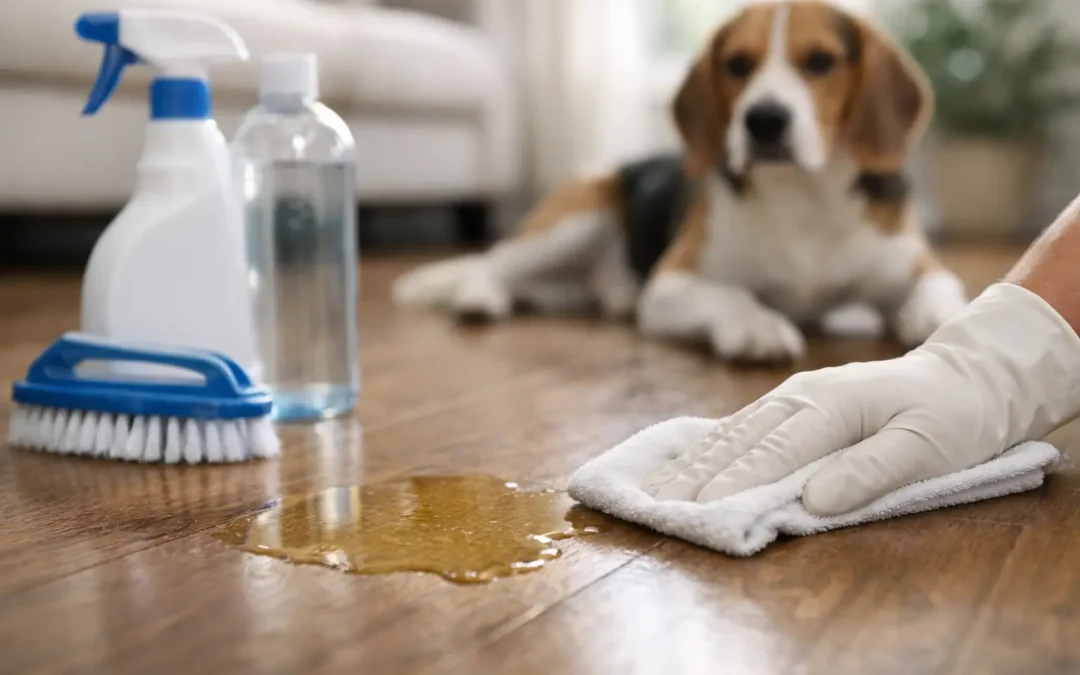
A pet accident can look minor at first, especially on a busy day. But pet urine removal is rarely just about blotting the visible spot. Urine can travel through carpet fibers, into backing and padding, along grout lines, or beneath furniture where odor lingers long after the surface appears clean. In Tampa Bay’s warm, humid conditions, that hidden moisture and residue can become even more noticeable.
The right response depends on the surface, how quickly the accident is addressed, and whether the pet has returned to the same area. Fast home care can prevent many stains. Repeated accidents, strong odors, or urine that has reached the carpet pad often require professional cleaning methods designed to treat the source rather than cover it up.
Why Pet Urine Is Harder to Remove Than It Looks
Pet urine contains water, waste compounds, and salts. As the water dries, those compounds remain in the fibers or porous surface. A room may smell fine until humidity rises, a door stays closed, or the area becomes damp again. That is why a lingering odor can seem to disappear and then return weeks later.
Carpet is especially vulnerable because liquid does not always stay where it lands. It can wick outward through the fibers and downward into the backing and padding. A small visible stain may have a much larger affected area underneath. If urine reaches the subfloor, treatment may need to address more than the carpet itself.
Tile and grout present a different challenge. Glazed tile is generally nonporous and easier to clean quickly, but grout lines can absorb urine if they are unsealed, worn, or cracked. Natural stone requires extra care because acidic or harsh cleaners can damage the finish. Upholstery, area rugs, mattresses, and draperies may also hold odor below the surface, particularly in thick fabrics or natural fibers.
What to Do Right Away After an Accident
The first few minutes matter. Blot fresh urine with clean white towels or paper towels, applying steady pressure to pull moisture up from the surface. Avoid rubbing. Rubbing spreads the liquid, pushes it deeper, and can roughen carpet fibers or distort upholstery fabric.
Once you have absorbed as much moisture as possible, use a cleaner made for pet urine and follow its directions closely. An enzymatic product can be useful on fresh, localized accidents because it is designed to break down odor-causing residue. Test any product in an inconspicuous location first, especially on wool rugs, delicate upholstery, natural stone, or colored carpet.
Do not use a steam cleaner on an untreated urine spot. Heat can set proteins and make the odor more difficult to remove. Strong bleach, ammonia, and heavily fragranced cleaners are also poor choices for many surfaces. Ammonia can resemble the scent of urine to pets, while bleach may discolor materials and create unsafe fumes when mixed with other products.
After cleaning, allow the area to dry completely. Fans and air conditioning can help reduce drying time. If the spot still has an odor after it dries, resist the urge to keep adding household products. Layering cleaners can leave sticky residue, damage fibers, and make professional treatment less predictable.
When Home Treatment Is Not Enough
A single fresh accident on a hard surface may be manageable at home. The situation changes when there are repeat incidents, old stains, noticeable odor, discoloration, or dampness beneath the carpet. Those signs suggest that urine has moved beyond the surface.
Pet behavior can offer an important clue. If a dog or cat repeatedly returns to one location, residual odor may be guiding them back, even if people cannot smell it. Treating only the visible area may not solve the problem because the affected area may extend under baseboards, furniture, or nearby carpet.
Rental-property owners and property managers should take recurring pet odor seriously between tenants. Surface deodorizing may improve the first impression during a showing, but it may not be enough for a new resident who keeps windows closed and uses the home every day. A proper assessment helps determine whether targeted carpet treatment, pad replacement, floor repair, or subfloor sealing is the appropriate next step.
Commercial facilities face a similar concern. An accident in a lobby, daycare area, veterinary office, or common space can affect indoor freshness and the appearance of the flooring. Prompt service helps protect customer-facing areas while reducing disruption to daily operations.
Professional Pet Urine Removal for Carpet and Rugs
Professional pet urine removal begins with locating and evaluating affected areas. Technicians consider the type of carpet or rug, the age of the stain, the presence of odor, and whether moisture has moved into backing, padding, or the subfloor. This step matters because the correct method for a recent spot may not be sufficient for a long-standing problem.
For many carpet situations, treatment includes targeted application of professional-grade solutions, extraction of dissolved contamination, and controlled drying. The goal is to remove urine residue rather than simply add fragrance. If the padding or subfloor has been heavily affected, a technician may recommend additional steps. That can include treating beneath the carpet, replacing damaged padding, repairing flooring, or sealing the subfloor before reinstalling materials.
Area rugs need a more tailored approach. Wool, silk, cotton, viscose, and specialty fibers can react differently to water, cleaning agents, and agitation. A rug’s construction, dyes, backing, and condition all influence the safest cleaning plan. Taking an aggressive approach with an off-the-shelf product may cause color bleeding, browning, shrinkage, or texture changes.
Superior Tile & Carpet Care uses trained technicians and professional equipment to address pet-related stains and odors while considering the material being cleaned. Green cleaning products can be part of the solution, but effective treatment still depends on matching the product and method to the specific flooring or fabric.
Tile, Grout, Upholstery, and Other Surfaces
Pet urine on tile should be cleaned promptly, including the grout lines and edges where flooring meets walls or cabinets. If grout remains discolored or retains odor, professional tile and grout cleaning can help remove embedded soil and residue. After cleaning, sealing grout may help limit future absorption, though sealers are not a substitute for prompt cleanup.
Upholstery requires careful moisture control. Liquid can pass through the fabric cover and settle in cushion filling, where odors become trapped. A couch cushion may look clean on top while still holding contamination inside. Professional upholstery cleaning can address the fabric and, when possible, the underlying materials without over-wetting the piece.
Mattresses call for special caution. Saturating a mattress can create a larger moisture problem and may encourage microbial growth. Blot the area, use only a small amount of appropriate product, and dry it thoroughly. If odor remains or the accident was extensive, a professional evaluation is the safer path.
Preventing Repeat Pet Accidents
Cleaning the affected surface is only part of the solution. Pets may have accidents because of changes in routine, anxiety, territorial behavior, aging, or health concerns. If accidents are new, frequent, or unusual for your pet, contact a veterinarian to rule out a medical issue.
At home, keep litter boxes clean and accessible, maintain consistent outdoor breaks, and limit access to previously affected rooms while they are being treated. A washable pet bed or protective cover can be useful in favorite resting areas. For carpets and rugs, regular professional cleaning can also remove the soil and residues that contribute to dull appearance and lingering household odors.
A clean floor should not come at the cost of damaged fibers, faded color, or residue that attracts more soil. When you are unsure how far an accident has traveled, an assessment is usually less costly than repeated DIY attempts. Addressing the source early helps preserve the comfort, cleanliness, and value of the spaces your family, tenants, customers, and pets share.