A sandy entryway, a pet’s water bowl, and Florida humidity can put more stress on luxury vinyl flooring than most homeowners expect. Vinyl plank maintenance is usually straightforward, but the wrong cleaner, too much water, or months of tracked-in grit can leave even a durable floor looking dull, streaked, or prematurely worn.
Luxury vinyl plank, often called LVP, is a practical choice for Tampa Bay homes, rentals, offices, and retail spaces because it handles everyday life well. It is water-resistant, comfortable underfoot, and available in styles that resemble wood or stone. Still, water-resistant does not mean maintenance-free. Consistent care protects the finish, keeps textured planks cleaner, and helps preserve the flooring investment.
Start With the Dirt You Can See and the Grit You Cannot
Most vinyl plank wear begins with dry debris. Sand, small stones, pet litter, and fine dirt act like abrasives when walked across the floor. Over time, they can scratch the protective wear layer and make the surface lose its even sheen, especially near doors, hallways, kitchen work areas, and commercial entrances.
Sweep with a soft-bristle broom, dry dust mop, or vacuum designed for hard surfaces. If using a vacuum, turn off the beater bar or rotating brush. A beater bar can scratch vinyl planks or leave scuff marks that are difficult to remove.
For busy households, dry cleaning every day or two is often worthwhile. A quieter home may only need it a few times a week. For property managers and business owners, the right frequency depends on foot traffic. A customer-facing lobby or rental common area may need attention daily, while a low-traffic office can often follow a less frequent schedule.
Place quality mats at exterior doors and ask guests, family members, or staff to wipe their feet before coming inside. In Tampa Bay, this simple step matters year-round. Sand and moisture can arrive after a beach day, afternoon rainstorm, landscaping work, or a quick walk to the mailbox.
Vinyl Plank Maintenance: Clean Without Overwetting
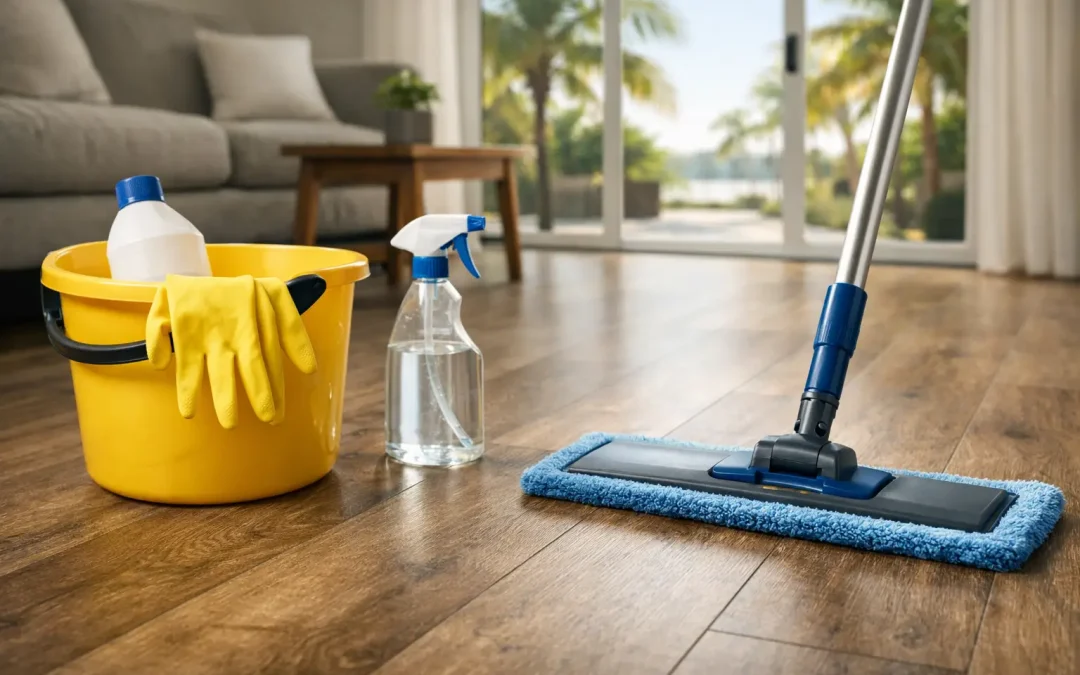
When the floor needs more than dry dusting, use a damp microfiber mop and a cleaner made specifically for luxury vinyl flooring. The mop should be damp, not soaked. Excess water can work its way into seams, under baseboards, or beneath poorly sealed edges. That moisture may affect the subfloor or adhesive even when the vinyl itself appears unharmed.
Work in manageable sections and allow the floor to air dry. If it remains wet for an extended period, go back over it with a clean, dry microfiber pad. This is especially useful in humid Florida weather, when floors may dry more slowly.
Avoid leaving cleaner residue behind. A product that is too concentrated or not rinsed properly can create a sticky film that attracts dirt. That film is often mistaken for a damaged finish, when the real issue is repeated buildup from cleaning products.
It is also wise to use clean mop pads. A gray or heavily soiled pad does not clean effectively – it redistributes dirt across the floor. Keep extra microfiber pads on hand so you can switch them out as needed.
Clean Up Spills Promptly
Wipe spills as soon as possible with a soft cloth or paper towel, then follow with a lightly damp microfiber cloth if necessary. Water, juice, cooking grease, pet accidents, and tracked-in rain are easier to remove before they dry into the texture of the plank.
For pet accidents, address both the visible spot and any odor. Avoid saturating the area with water or heavily scented products. If urine has reached a seam, edge, transition, or the flooring underneath, a surface wipe may not fully resolve the issue. Persistent odor or recurring stains may call for professional assessment to determine whether moisture has traveled below the planks.
Cleaners and Tools to Avoid
Vinyl plank flooring does not need harsh treatment to look clean. In fact, aggressive products and abrasive tools can shorten the life of the finish. Skip steam mops, abrasive scrub pads, steel wool, and stiff-bristle brushes. High heat and steam can force moisture into joints and may weaken adhesives or distort certain installations.
Also avoid waxes, acrylic floor finishes, oil soaps, solvent-based products, and cleaners marketed for traditional hardwood unless the flooring manufacturer specifically approves them. These products can leave a cloudy coating, create a slippery surface, or interfere with future professional cleaning.
Bleach, ammonia, and highly acidic cleaners should be used with caution and only according to flooring manufacturer instructions. A strong disinfectant may sound like the best solution after a spill or illness, but it can discolor or dull some vinyl finishes. For routine cleaning, a pH-neutral vinyl floor cleaner and a microfiber mop are usually the safer choice.
If you are trying a new product, test it in a hidden area first. Check the flooring warranty and care instructions as well. Different LVP brands and installation systems can have different requirements, particularly for adhesive-down flooring and commercial-grade products.
Prevent Marks Before They Become Permanent
Furniture legs can create dents, scratches, and black transfer marks when moved across vinyl. Use felt pads or non-staining floor protectors under chairs, tables, sofas, and other heavy pieces. Check those pads regularly. Grit can become trapped underneath, turning a protective pad into a source of scratching.
When moving furniture, lift it whenever possible. For larger items, use protective sliders rated for vinyl flooring. Do not drag appliances, loaded cabinets, or heavy furniture directly over the planks.
Rubber-backed mats deserve extra attention. Some rubber and latex materials can react with vinyl over time, causing yellowing or discoloration. Choose mats labeled safe for luxury vinyl flooring, particularly in kitchens, bathrooms, entryways, and commercial work areas.
Sunlight is another consideration. Tampa Bay properties receive plenty of it, and repeated direct exposure can cause uneven fading over time. Blinds, curtains, UV-filtering window treatments, and occasional furniture rearrangement can help keep color changes more uniform. This matters most near large sliding doors and sun-facing windows.
Address Stains and Scuffs Carefully
A soft microfiber cloth is the best first response to most marks. For stubborn scuffs, use a vinyl-safe cleaner according to its directions and rub gently. Do not scrape at the spot with a blade, knife, or abrasive sponge.
Grease near a stove, makeup in a bathroom, or sticky residue from labels may need more than water. Use a manufacturer-approved cleaner in small amounts and avoid allowing it to pool. For a difficult stain, uncertainty is a good reason to stop before experimenting with stronger chemicals. Replacing a damaged plank is more disruptive and expensive than getting informed help for one spot.
Dark streaks may also be transfer marks from shoes, carts, furniture feet, or rubber wheels rather than damage to the flooring itself. These often respond to careful spot cleaning. If the surface looks hazy across a larger area, the cause may be residue buildup or embedded soil in the textured finish.
When Professional Vinyl Floor Cleaning Helps
Routine mopping keeps day-to-day dirt under control, but it may not remove accumulated residue, greasy film, textured-surface soil, or buildup in high-traffic pathways. This is common in kitchens, rental turnovers, medical or office settings, restaurants, and homes with active pets and children.
Professional luxury vinyl plank cleaning uses equipment, methods, and cleaning solutions chosen to lift embedded soil without damaging the floor’s finish. The goal is not to flood the surface or apply a coating that hides the problem. It is to remove the grime that ordinary mopping leaves behind and restore a cleaner, more even appearance.
For commercial properties, scheduled floor care can also reduce disruption. A planned maintenance visit is easier to manage than waiting until a customer-facing floor looks visibly neglected. For rental owners, professional cleaning between tenants can help document condition, improve presentation, and identify concerns around seams, water exposure, or damaged planks.
Superior Tile & Carpet Care provides professional cleaning for luxury vinyl plank floors throughout the Tampa Bay area, using trained technicians and cleaning approaches suited to the condition of the surface. When a floor has stubborn buildup, odor concerns, or signs of moisture-related trouble, professional attention can help protect both the visible flooring and what may be happening underneath it.
Watch for Signs of Moisture Damage
Luxury vinyl is often selected for rooms where moisture is a concern, but water can still cause problems below or around the flooring. Watch for lifted edges, gaps that were not previously present, soft spots, unusual odors, recurring stains, or planks that shift underfoot. After a plumbing leak, appliance overflow, roof leak, or flood event, do not assume the floor is unaffected just because the top surface dries quickly.
Prompt water extraction and professional drying may be necessary to protect subflooring, trim, walls, and adjacent rooms. The sooner moisture is addressed, the better the chance of limiting repairs and preventing mold-related concerns.
A well-maintained vinyl plank floor should look clean without looking coated, feel secure underfoot, and stand up to the real demands of a Florida property. A few consistent habits – dry debris removal, light damp mopping, prompt spill cleanup, and careful product choices – go a long way toward keeping it that way.