A supply line can fail behind a wall for hours before anyone notices. A washing machine hose can burst while a family is away. During a Tampa Bay storm, water may enter through a roof opening, window, or door and spread quickly across carpet, tile, wood, and luxury vinyl flooring. In these moments, emergency restoration companies do far more than remove standing water. Their job is to stop additional damage, identify affected materials, dry the structure correctly, and help property owners make informed decisions while the situation is still changing.
For homeowners, rental owners, property managers, and businesses, the first hours after water intrusion often determine whether the outcome is a manageable repair or a larger restoration project. Fast action matters, but so does choosing a local team that can assess the source, protect the property, and communicate clearly about what comes next.
What Emergency Restoration Companies Actually Do
Emergency restoration is a coordinated response to sudden property damage. Water damage is one of the most common calls, but restoration teams may also respond to flooding, sewage backups, storm-related damage, fire-related water damage, and situations requiring specialized cleanup.
The work begins with safety and source control. If water is still entering the property, drying equipment alone will not solve the problem. A qualified restoration provider helps identify where the water is coming from, documents visible conditions, and separates immediate mitigation from repairs that may require a plumber, roofer, electrician, or other trade professional.
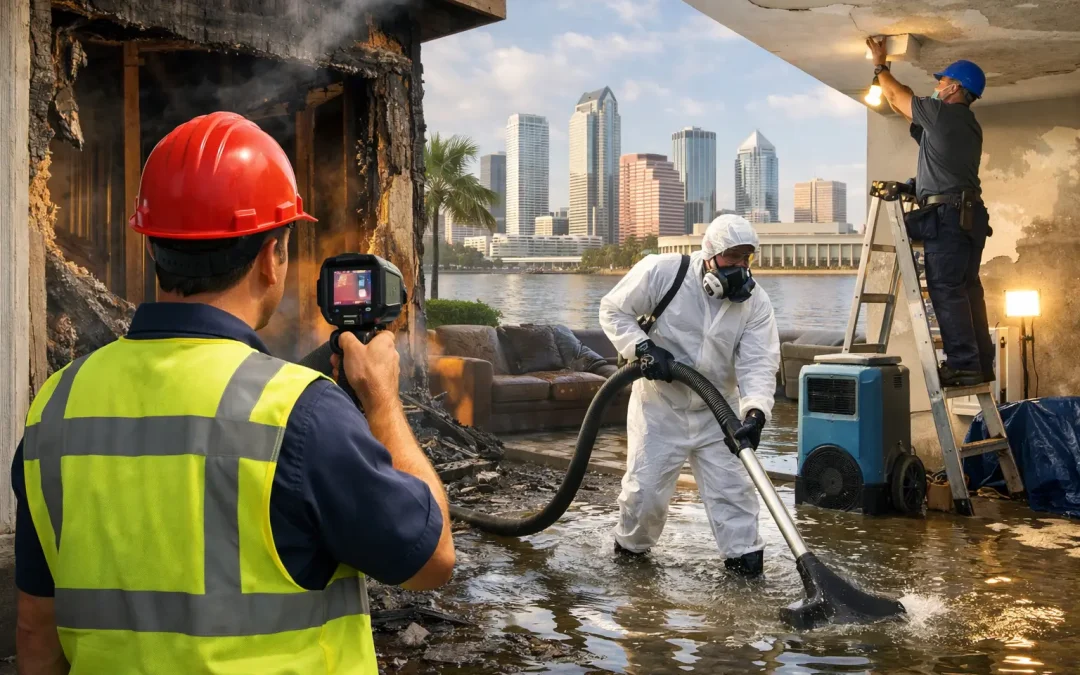
Next comes extraction and moisture assessment. Water can move far beyond the visible puddle. It may travel under baseboards, wick into drywall, soak carpet padding, enter subflooring, or settle beneath flooring materials. Professional moisture meters, thermal imaging tools, air movers, and dehumidifiers help technicians locate and remove moisture that ordinary household fans cannot address effectively.
The final phase depends on the damage. Some materials can be dried and restored. Others may need to be removed to prevent odors, deterioration, or microbial growth. A dependable provider explains the difference rather than promising that every surface can be saved.
Why Fast Response Protects More Than Flooring
Water rarely stays where it lands. On carpet, it can soak through the backing and padding into the subfloor. On tile, water may reach grout lines, wall edges, cabinets, and adjoining rooms. With wood floors and some luxury vinyl plank installations, moisture can cause cupping, swelling, separation, or adhesive failure.
The urgency is not only about appearances. Prolonged moisture can affect indoor air quality, weaken materials, create odors, and disrupt normal use of the home or business. In commercial settings, it can also interrupt operations, inconvenience tenants, and create slip hazards for staff and customers.
That said, not every wet floor needs the same response. A small, clean-water spill caught immediately may only require targeted extraction and drying. A flooded room, appliance leak that sat overnight, or water that entered from outdoors deserves a more complete inspection. The water source, how long it was present, the affected materials, and the size of the area all influence the proper scope of work.
The First Steps to Take After Water Damage
Property owners should focus on safety before cleanup. If water is near electrical outlets, appliances, or a breaker panel, avoid entering the area until it is safe to do so. If the water appears to come from sewage, a toilet overflow involving waste, or an unknown source, keep people and pets away from the affected space.
Once it is safe, stop the source if possible. Shut off the water supply to a leaking appliance or fixture, place a container under a slow drip, or move dry belongings away from the area. Take clear photos and short videos before major cleanup begins. This documentation can be useful for insurance discussions and for showing a restoration team how conditions looked when the damage was discovered.
Avoid assumptions that can make recovery harder. Do not run a household vacuum over standing water. Do not place foil directly under wet furniture without considering whether dyes or finishes may transfer. Do not pull up flooring, remove baseboards, or discard materials before a professional assessment unless there is an immediate safety concern. Those choices may affect drying, repairs, and insurance documentation.
A restoration provider can then determine what should be extracted, what can be moved, which materials need controlled drying, and whether specialty floor or fabric care is needed after the structural work is complete.
Choosing Emergency Restoration Companies in Tampa Bay
When water is spreading through a property, it is easy to focus only on who can arrive first. Availability is essential, but it should not be the only consideration. Restoration work affects the condition of your property long after the equipment is removed.
Look for a company that is licensed and insured, uses trained technicians, and has professional-grade drying and moisture-detection equipment. Ask how the team determines that an area is dry, not simply how long equipment will run. Drying is based on measured conditions and material response, not a one-size-fits-all timeline.
Clear communication also matters. You should understand what work is being performed, which materials are affected, what can reasonably be restored, and what follow-up may be necessary. For a property manager, this clarity supports tenant communication and operational planning. For a homeowner, it reduces uncertainty during a stressful event.
Local experience has practical value in Florida. Tampa Bay properties face heavy rain, hurricane-season conditions, high humidity, and a mix of construction styles and flooring types. A local team understands that moisture control can be more challenging when outside humidity is high and that a property may need both emergency drying and later cleaning, odor treatment, floor repair, or upholstery care.
Superior Tile & Carpet Care provides emergency restoration alongside floor and fabric cleaning services, giving local property owners one experienced resource when water damage affects both the building and the surfaces inside it.
What a Professional Drying Plan Should Include
A proper drying plan is tailored to the affected area. Technicians should inspect rooms beyond the obvious damage zone, especially if water traveled through carpet, beneath flooring, along walls, or into nearby closets. They should take moisture readings, establish drying goals, and monitor progress during the job.
Extraction is often the most important early step. Removing as much water as possible before placing drying equipment can shorten drying time and reduce the chance of damage spreading. After extraction, air movement and dehumidification work together to pull moisture from materials and control humidity in the space.
Contents also need attention. Area rugs, upholstered furniture, drapery, mattresses, and personal belongings may require specialized evaluation. Some items can be cleaned and dried successfully; others may not be salvageable depending on the water source and saturation level. Fine fabrics and rugs should not be treated as an afterthought, since improper handling can cause color bleeding, shrinkage, or permanent texture changes.
Before equipment is removed, the team should verify that targeted materials have reached an appropriate dry standard. This is where measurement and documentation are more meaningful than a room that merely feels dry to the touch.
Restoration, Repair, and Cleaning Are Different Jobs
Emergency mitigation is designed to prevent further damage. It is not always the same as full repair or final cleaning. For example, a wet carpet may be extracted and dried during the emergency response, then need professional cleaning afterward to remove residue or restore its appearance. A tile floor may survive the water event but require grout cleaning once the surrounding area is stabilized.
Likewise, damaged flooring may need repair after moisture issues are addressed. Wood can sometimes be restored when drying begins quickly, while severely warped materials may need replacement. Luxury vinyl plank performance depends on the product, installation method, condition of seams, and whether water reached the subfloor. A responsible contractor evaluates the situation rather than treating every flooring material the same way.
This distinction helps property owners plan realistically. The emergency goal is to stabilize and dry the property. The repair and cleaning phase is about returning the space to a safe, functional, presentable condition.
A Better Way to Prepare Before an Emergency
No one can prevent every leak or storm event, but a few simple preparations can reduce confusion. Know the location of the main water shutoff valve. Replace aging appliance hoses and inspect washing machines, water heaters, sinks, and refrigerator lines periodically. Keep photos of valuable rooms and major belongings, especially in rental and commercial properties where documentation matters.
For property managers and business owners, a written emergency contact plan can save valuable time. Staff should know who is authorized to make decisions, where to report a leak, and how to protect occupants while help is on the way. Regular carpet, tile, upholstery, and air-duct maintenance also supports a cleaner property and can make post-incident assessment easier by keeping existing stains, odors, and wear from being confused with new damage.
When water enters a property, the right response is calm, prompt, and informed. Protect people first, stop the source when it is safe, document conditions, and bring in trained help before hidden moisture has time to become a larger problem.