A Tampa Bay air conditioner can run for most of the year, moving conditioned air through the same network of supply and return ducts every day. When dust buildup, renovation debris, musty odors, or visible contamination begin affecting that system, air duct cleaning services can be a practical part of protecting indoor comfort and property condition. The right time to schedule service depends on what is happening inside the home or facility, not simply a date on the calendar.
For homeowners, property managers, and business owners, the goal is straightforward: remove accumulated debris from accessible HVAC components and improve the cleanliness of the system that circulates air throughout the property. A professional assessment helps separate a genuine duct-cleaning need from problems that may actually require HVAC repair, moisture control, or filter changes.
Signs Air Duct Cleaning Services May Be Needed
A light layer of household dust near vents is normal, especially in Florida where doors open often, pets come in from the yard, and air conditioning stays active. Duct cleaning is more worth considering when there is a clear source of contamination or a noticeable change in the property.
Recent construction or remodeling is one common example. Drywall dust, sawdust, and other fine debris can travel farther than expected, even when contractors use containment. If floors and furniture continue to collect a fine film after the work is complete, the HVAC system may have drawn in dust during the project.
Water intrusion is another reason to look closely at the duct system. A roof leak, plumbing failure, flood, or persistent humidity issue can create conditions where moisture and debris collect together. Cleaning may be appropriate after the moisture source has been corrected. If mold is suspected, the first priority is identifying and resolving the moisture problem. Cleaning alone cannot stop contamination from returning when the underlying cause remains.
Other signs include visible debris around registers, unexplained musty odors when the system runs, pest activity near ductwork, or a move into a previously occupied home or commercial suite with an unknown maintenance history. In rentals, duct cleaning can be especially useful between tenants when odors, pet hair, smoking residue, or renovation dust have affected the property.
What a Professional Duct Cleaning Visit Should Address
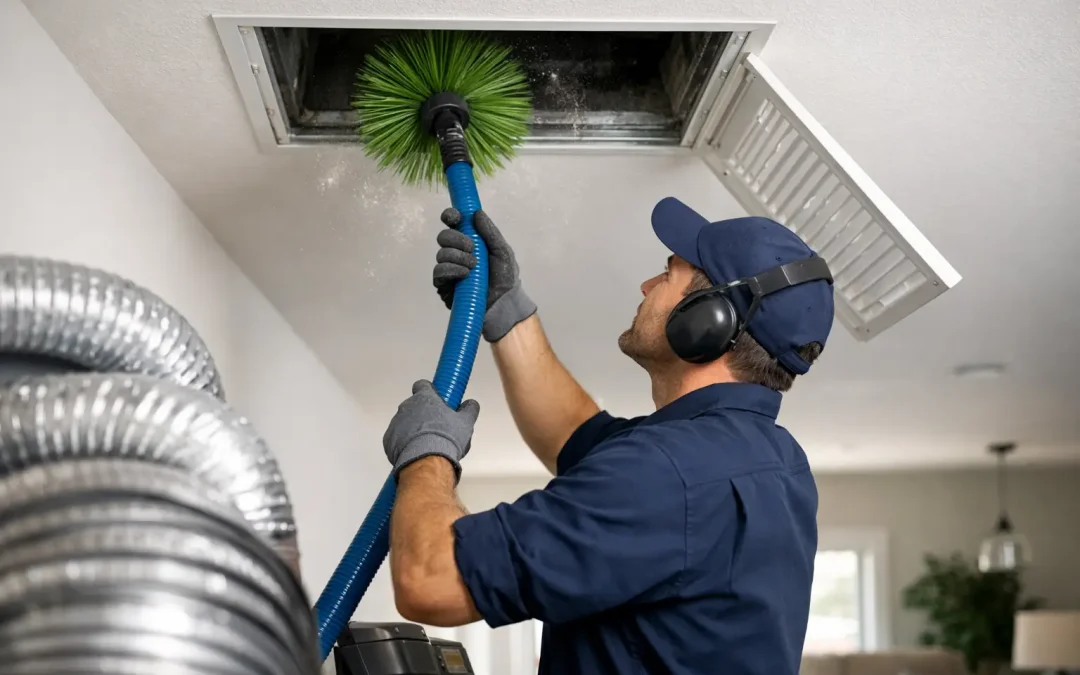
Effective duct cleaning is more than removing the vent covers and vacuuming a few inches into an opening. A trained technician should inspect the accessible system, discuss the concerns that prompted the appointment, and use equipment designed to capture loosened debris rather than spread it through the home or business.
The work may include cleaning accessible supply and return ducts, registers, grilles, and related HVAC components where appropriate. Technicians should protect nearby flooring and furnishings, especially in occupied homes, offices, and tenant spaces. At Superior Tile & Carpet Care, the same careful, property-focused approach used for floors and fine fabrics applies to indoor cleaning services: clear communication, professional equipment, and attention to the surfaces around the work area.
The precise scope varies. Older homes may have duct runs that are harder to access. Commercial systems can involve larger, more complex layouts and may need scheduling around business hours. A responsible provider explains what can be cleaned, what may require an HVAC contractor, and whether any conditions found during inspection need further attention.
Duct Cleaning Is Not a Substitute for HVAC Maintenance
This distinction matters. Dirty filters, a malfunctioning air handler, damaged ductwork, inadequate insulation, or poor drainage can affect comfort and indoor air quality. Air duct cleaning does not repair a mechanical problem or make an undersized system perform like a new one.
For most properties, regular filter replacement and scheduled HVAC maintenance remain the foundation of system care. Duct cleaning is a targeted service to consider when contamination, unusual odors, post-construction debris, water damage, or a property turnover creates a specific reason. It is not necessarily an annual requirement for every household.
Florida Conditions Can Change the Cleaning Schedule
There is no universal schedule for duct cleaning. A home with no pets, no indoor smoking, good filtration, and consistent HVAC maintenance may need it less often than a busy household with several pets, allergy-sensitive occupants, or recent remodeling work.
Tampa Bay’s climate adds a few considerations. High humidity makes fast response to water leaks and condensation issues especially important. Frequent system operation means filters can load up quickly, particularly during heavy cooling months. Coastal areas may also bring more outdoor particulates into homes and businesses that open doors frequently or have active entryways.
Commercial properties need an equally practical approach. A small office, medical waiting room, retail space, daycare, or rental community office can accumulate dust and debris based on foot traffic, operating hours, occupancy, and the condition of its HVAC equipment. Service can often be planned around lower-traffic periods to limit disruption for employees, customers, and residents.
Questions to Ask Before Scheduling Service
Choosing a qualified provider protects both the property and the HVAC system. Be cautious with unusually low advertised prices that do not explain the scope of work. Duct cleaning involves equipment, labor, access, and cleanup. A vague offer can lead to surprise charges or work that only addresses visible vents.
Before booking, ask whether the company is licensed and insured, what portions of the system it will clean, how it controls dust during the process, and whether the estimate includes accessible supply and return ducts. It is also reasonable to ask how the company handles suspected mold, damaged ductwork, or signs of moisture. A reliable provider will not promise that cleaning alone will solve every air-quality concern.
For property managers, document the condition that led to the request. Photos of visible debris, notes about an odor, records of a leak, or details from a renovation can help define the scope. For homeowners, mention recent construction, pets, smoke exposure, water events, or respiratory sensitivities before the appointment so technicians can plan accordingly.
Keep the System Cleaner After the Appointment
Once ducts have been professionally cleaned, routine habits help preserve the result. Use the filter type recommended for the HVAC system and replace it on schedule. Keep supply and return vents unobstructed, and address water leaks or recurring condensation promptly. During a renovation, ask contractors to isolate work areas and protect registers from dust.
Dryer vent maintenance should also be treated separately from duct cleaning. A dryer vent carries lint outdoors and requires its own cleaning process. When lint accumulates, drying times may increase and fire risk can rise. Homes with long vent runs, frequent laundry use, or a vent that exits through the roof often benefit from regular professional inspection and cleaning.
A Cleaner System Starts With the Right Diagnosis
Air duct cleaning is most valuable when it responds to a real condition in the home or business. Whether the concern is post-renovation dust, a property turnover, pet-related buildup, a musty odor, or the aftermath of water intrusion, start with an honest evaluation of the system and the source of the problem. That approach helps you invest in cleaning when it will make a meaningful difference and address repairs or moisture issues when they are the real next step.
A well-maintained property rarely depends on one service alone. Consistent filter changes, prompt leak repairs, professional HVAC care, and targeted cleaning when conditions call for it can keep the spaces where your family, tenants, employees, and customers spend time feeling cleaner and more comfortable.