A tile floor can look clean from across the room and still hold months of tracked-in soil in its grout lines. In Tampa Bay homes and businesses, tile and grout cleaning is often needed sooner than owners expect because sand, humidity, pet traffic, cooking residue, and everyday foot traffic all settle into textured surfaces. The result is a floor that appears dull, stained, or permanently discolored even after regular mopping.
The good news is that many tile floors do not need replacement. With the right cleaning method, embedded buildup can be removed and the original color and definition of the grout can become visible again. The key is matching the process to the tile, the grout condition, and the source of the soil.
Why Mopping Does Not Fully Clean Grout
Tile has a smoother, more protective surface than grout. Grout is cement-based in many installations and naturally porous unless it has been properly sealed. That means it can absorb moisture, oils, spills, cleaning residue, and fine particles that a mop passes over without lifting.
A mop can also move dirty water from one area to another. Over time, detergent residue may leave behind a sticky film that attracts more soil. In kitchens, this is often mixed with grease. In entryways and bathrooms, it may be sand, mineral deposits, soap residue, or moisture-related staining.
Florida’s humid conditions add another consideration. Damp floors, slow drying, and poorly ventilated bathrooms can encourage mildew growth around grout, caulk, and shower tile. Surface mildew should be addressed promptly, but deep staining is not always mildew. It may be absorbed soil, failed sealer, hard-water deposits, or aging grout. A proper evaluation prevents the wrong treatment from damaging the surface or simply masking the problem.
What Professional Tile and Grout Cleaning Addresses
Professional cleaning is designed to remove the buildup that routine maintenance leaves behind. Technicians inspect the flooring first to identify the type of tile, grout condition, existing sealers, cracked areas, and stains that may require special attention.
For many floors, the process begins with a cleaning solution selected for the soil load and surface material. Green cleaning detergents can be an effective option for routine residential and commercial buildup when used correctly. The solution is allowed time to loosen soils before technicians agitate grout lines and textured tile areas with appropriate equipment.
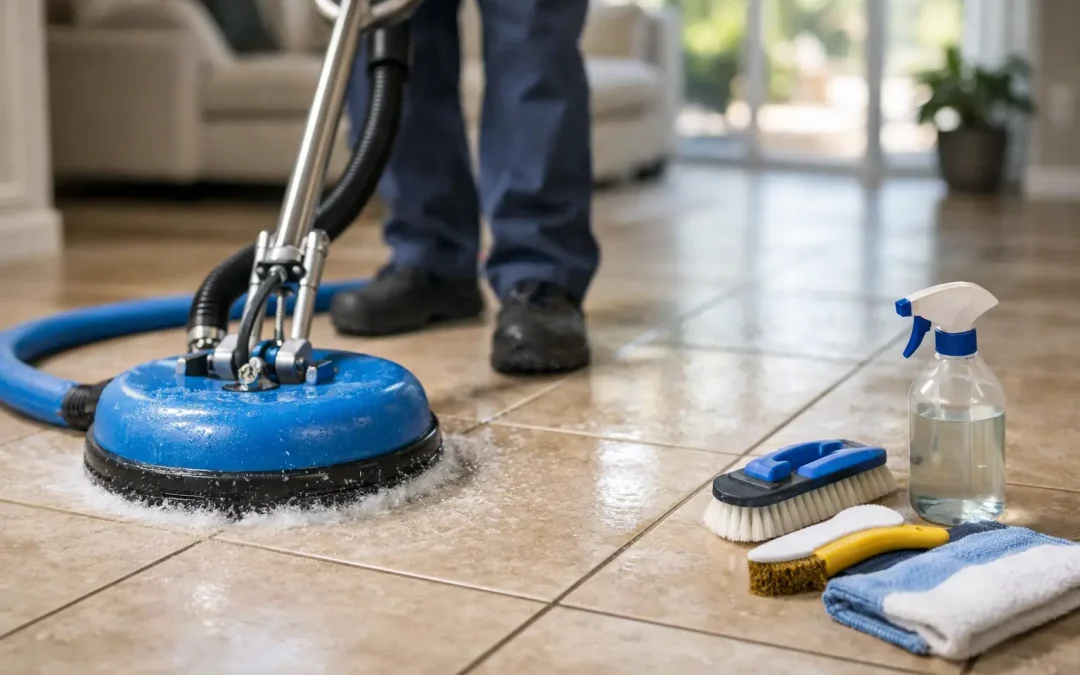
Professional-grade extraction equipment then lifts the suspended soil and cleaning solution from the floor rather than spreading it across the room. This step matters. The goal is not just to make grout look brighter temporarily, but to remove the residue that contributes to rapid resoiling. Floors are then rinsed as needed and dried so they can return to normal use with minimal interruption.
Some conditions call for more than standard cleaning. Grout that has lost its color unevenly may benefit from color sealing or restoration. Cracked or missing grout, loose tile, and water-damaged flooring may require repair before cleaning can produce lasting results. A dependable service provider should explain those distinctions clearly instead of promising that every stain will disappear.
Not Every Tile Can Be Treated the Same Way
Ceramic and porcelain tile are common throughout Tampa Bay and are generally durable, but they still vary in finish and texture. Textured porcelain, for example, can hold soil in small surface grooves. Glazed ceramic tile may tolerate a different approach than unglazed tile.
Natural stone requires added care. Marble, travertine, limestone, slate, and other stone surfaces can react poorly to acidic or overly aggressive chemicals. Stone may need a pH-appropriate cleaner, careful agitation, and specialized sealing after cleaning. Using a harsh store-bought cleaner on the wrong surface can etch the finish, dull the stone, or cause uneven color changes.
Even grout type matters. Epoxy grout is more resistant to staining than traditional cement grout, while older cement-based grout may be deeply absorbent. An experienced technician assesses what is present before selecting products and equipment.
Signs Your Floor Is Ready for Tile and Grout Cleaning
Discoloration is the most obvious sign, but it is not the only one. When grout looks darker near doorways, appliances, dining areas, or shower entrances, that usually indicates embedded soil rather than natural variation. A floor that feels tacky after mopping may have cleaning-product residue. Persistent odors near tiled bathrooms, laundry rooms, or pet areas can also point to trapped moisture or soil around grout lines.
Property managers may notice the issue during turnover inspections. Tile that looked acceptable under normal lighting can show heavy traffic patterns once furniture is removed. For restaurants, offices, medical spaces, retail stores, and other commercial properties, dull flooring can affect how customers and tenants perceive the entire facility.
It is also wise to schedule an inspection after a leak or minor water intrusion. Tile itself may appear unaffected while water has traveled through damaged grout, failed caulk, or gaps at transitions. Cleaning cannot resolve hidden moisture issues, but a knowledgeable flooring-care professional can help identify when restoration or repair should come first.
Cleaning, Sealing, and Restoration Work Together
Cleaning is the foundation of tile care, but sealing can help protect the results. A penetrating grout sealer reduces how quickly porous grout absorbs future spills and soils. It does not make grout completely stain-proof, and it will not repair cracks or failing joints. Still, it can make regular maintenance easier and extend the time between deep cleanings.
The best timing for sealing depends on the condition of the grout and the type of surface. New grout needs adequate curing time. Older grout should be thoroughly cleaned and dry before sealer is applied. In wet locations such as showers, attention should also be given to caulk, ventilation, and any signs of water getting behind the tile.
For heavily stained grout, color sealing may be a practical alternative to replacement. This process applies a durable colorant to clean, sound grout to create a more uniform appearance while adding a protective barrier. It is not right for every floor, especially where grout is loose or damaged, but it can be a cost-conscious restoration option when replacement is not necessary.
A Realistic Maintenance Plan for Tampa Bay Properties
How often a floor needs professional service depends on use, location, and maintenance habits. A lightly used guest bathroom may need deep cleaning far less often than a busy family kitchen, rental unit, lobby, or restaurant entrance. Homes with pets, children, pool traffic, or frequent entertaining usually benefit from more consistent floor care.
Between professional visits, sweep or vacuum regularly to remove grit that can wear on tile finishes and settle into grout. Use a damp microfiber mop rather than soaking the floor, and choose a cleaner made for the specific tile type. Avoid using excessive soap, wax-based products, or harsh acids unless the flooring manufacturer specifically approves them. Rinse spills promptly, especially cooking oils, dark beverages, pet accidents, and strongly colored products.
In showers, use ventilation and wipe down wet surfaces when practical. This reduces lingering moisture and helps slow soap-scum buildup. If grout begins to crack, caulk pulls away, or tiles sound hollow underfoot, address the condition early. Small failures can allow water into areas where it becomes far more expensive to correct.
Why Experience Matters When Floors Need More Than a Surface Clean
Tile care is often presented as a simple cleaning task, but the details matter when a floor has years of buildup, fragile stone, failed grout, or water-related concerns. The wrong chemical can damage natural stone. Excessive pressure can affect weak grout. Skipping extraction can leave residue behind, and sealing over dirt can lock in a disappointing appearance.
For homeowners, the value of professional service is confidence that the floor is being treated for its actual condition. For property managers and commercial clients, it also means reliable scheduling, insured service, consistent results, and less disruption to residents, employees, or customers.
Superior Tile & Carpet Care brings certified technicians, professional-grade equipment, and responsible cleaning products to tile surfaces throughout Greater Tampa Bay. Whether the need is routine maintenance, a rental turnover, a customer-facing commercial floor, or a surface affected by water concerns, the right process protects both appearance and the flooring investment.
A clean tile floor should not merely look brighter on the day it is serviced. It should be easier to maintain, more comfortable to use, and better prepared for the daily traffic that comes next.