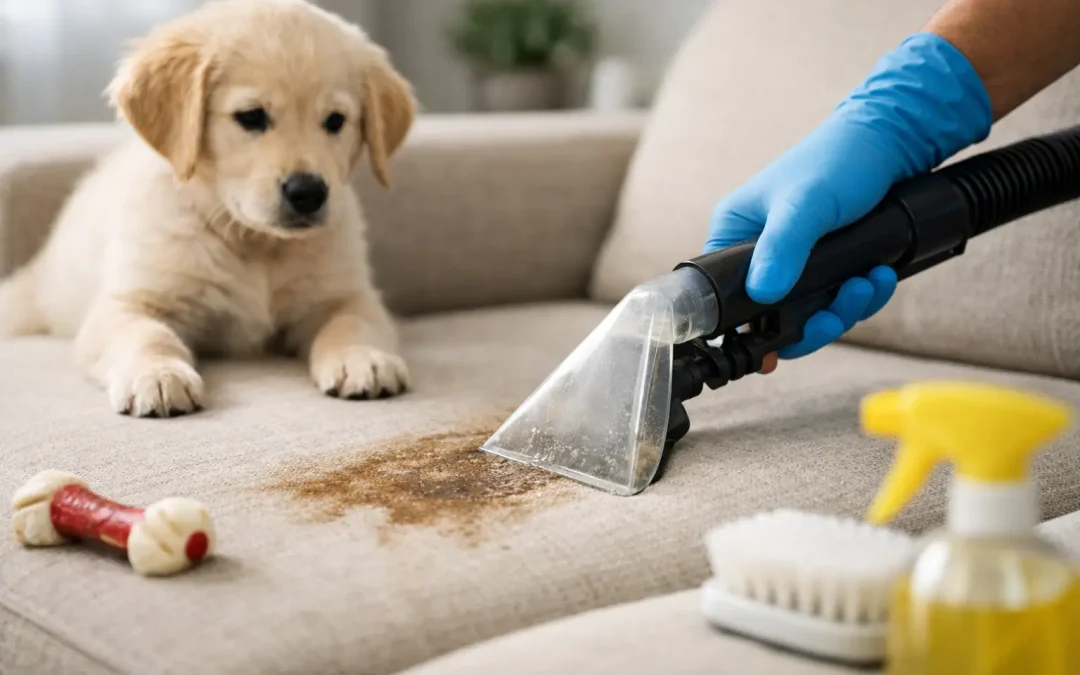
A pet accident on the sofa is rarely just a surface problem. By the time a homeowner notices a yellowed spot or a lingering odor, moisture may have moved through the fabric, cushion filling, and even the furniture frame. Effective upholstery cleaning pet stain removal addresses all of those layers, not just the mark that is visible from across the room.
For Tampa Bay homes, humidity can make the issue more noticeable. Warm, damp conditions can prolong drying and allow odor-causing residue to remain active. A careful response protects the look of the furniture, helps maintain a cleaner indoor environment, and reduces the chance that a pet returns to the same spot.
Why Pet Stains in Upholstery Need More Than Spot Cleaning
Pet urine contains water, organic material, salts, and uric acid compounds. When the liquid dries, some of those compounds remain in the upholstery. A store-bought cleaner may improve the surface appearance while leaving residue deeper in the cushion. Later, moisture in the air or a fresh cleaning attempt can reactivate the odor.
Pet vomit and feces create different concerns. They can leave behind proteins, dyes, oils, bacteria, and acidic residue that may affect fabric color or texture. The right cleaning approach depends on what caused the stain, how long it has been there, and whether the upholstery is a durable synthetic, delicate natural fiber, microfiber, leather, or a specialty fabric.
This is why aggressive scrubbing is often the wrong first move. Rubbing can push contamination farther into the cushion, spread the affected area, roughen fibers, or create a visible water ring. Bleach, ammonia, and heavily scented products may also cause discoloration or leave a fragrance that masks the odor without removing its source.
What to Do Immediately After a Pet Accident
Fast action can make a meaningful difference, especially before a liquid reaches the padding. Start by blotting the area with clean white towels or paper towels. Press down firmly, replacing the towel as it becomes damp. Avoid rubbing back and forth, which spreads moisture and can damage the upholstery pile.
If solids are present, remove them carefully with a spoon or dull edge before blotting. Do not saturate the fabric with water. Excess moisture can drive the stain deeper, affect cushion backing, and increase drying time in Florida’s humid conditions.
Before using any cleaning product, check the furniture tag. Upholstery codes can provide useful guidance: W generally permits water-based cleaning, S calls for solvent-based methods, WS may allow either, and X usually means vacuuming or professional cleaning only. The code is helpful, but it does not identify every risk. Fabric dyes, construction, age, prior treatments, and hidden padding can all change how a piece responds.
If the accident is fresh and the furniture has a removable cushion cover, resist the urge to remove it and put it in the washing machine unless the manufacturer specifically permits it. Covers can shrink, lose shape, or dry unevenly, leaving a cushion that no longer fits properly.
How Professional Upholstery Cleaning Pet Stain Removal Works
Professional treatment begins with inspection, not with a one-size-fits-all spray. A trained technician identifies the upholstery fiber, tests an inconspicuous area for colorfastness, evaluates the stain, and checks whether odor has reached the cushion insert or foundation. That assessment determines the safest cleaning chemistry and method.
For urine contamination, the goal is to treat the source rather than perfume over it. Depending on the fabric and construction, this can involve targeted odor treatment, controlled flushing or extraction, and careful moisture management. The technician may need to treat both the face fabric and the affected cushion components. When residue has traveled beyond the cover, surface-only cleaning is unlikely to deliver a lasting result.
For vomit, feces, food-related stains, and muddy paw prints, technicians select cleaning solutions based on the material involved. Protein stains, oily stains, and dye-based stains respond differently. Green cleaning detergents and professional-grade products can provide effective cleaning while keeping the process appropriate for the furniture and household.
Extraction is valuable when the upholstery can safely tolerate it because it removes suspended soil and cleaning residue instead of leaving both behind. Delicate fabrics may require lower-moisture methods, solvent-based cleaning, or specialized hand treatment. The trade-off is that the safest method is not always the fastest or most aggressive one. Protecting the fabric and structure of an expensive sectional, heirloom chair, or fine-fabric piece comes first.
Odor Removal Depends on Where the Contamination Traveled
A couch can smell clean immediately after treatment but develop odor again days later if the underlying contamination was not reached. This is especially common with older urine stains, thick cushions, recliners, and furniture with layered foam or batting.
Odor can also be difficult to locate because pets do not always stain the center of a cushion. Liquid may travel along seams, settle beneath a removable cushion, or reach the deck fabric below. A professional inspection helps determine whether the affected area is limited to a cover or extends to the cushion core and frame.
There are cases where cleaning cannot fully restore the furniture. If urine has repeatedly saturated foam, particleboard, or structural materials, replacement of a cushion insert or repair of affected components may be the more practical option. Honest recommendations matter. Continuing to add product to a severely contaminated cushion can leave the owner with a damp sofa and the same odor problem.
Avoid These Common Pet-Stain Mistakes
Home remedies can be useful for a small, fresh accident on a washable fabric, but several habits make professional restoration harder. Avoid steam cleaning an untreated protein stain, since heat can set some residues. Do not combine cleaning products, particularly products containing ammonia, bleach, peroxide, or acids. Chemical combinations can damage upholstery and create unsafe fumes.
Be cautious with enzyme cleaners as well. They can be helpful when used correctly, but they need enough contact time to work and may not be suitable for every textile. Applying them too heavily to dense upholstery can leave excessive moisture in the padding. Always test products in a hidden location and follow the product directions rather than assuming more solution will produce better results.
Another mistake is covering the area before it is fully dry. Throw blankets, decorative pillows, or plastic covers can trap moisture and encourage musty odors. Allow treated furniture to dry with good air circulation, and keep pets off the area until it is dry and the odor treatment has had time to work.
Prevent Repeat Accidents on Furniture
Cleaning the upholstery is one part of the solution. If a pet repeatedly returns to the same chair or sofa corner, odor residue may still be present, but routine and health issues can also play a role. A sudden change in bathroom habits is worth discussing with a veterinarian.
For households with young pets, senior pets, or animals adjusting to a new home, washable furniture covers can provide temporary protection. Regular vacuuming removes pet hair, dander, and dry soil before they work into the weave. Prompt attention to accidents also prevents stains from becoming a larger restoration project.
Scheduled professional upholstery cleaning can be a practical part of property care for homes, rentals, offices, and waiting areas where pets are present. It helps remove body oils, tracked-in soil, allergens, and the gradual buildup that makes isolated stains stand out more sharply.
Choosing a Local Upholstery Cleaner
Ask whether the company evaluates fabric type before cleaning, addresses odor at the source, and uses methods suited to the furniture rather than relying on a single process. Licensed and insured service, trained technicians, clear expectations, and a satisfaction-focused approach are especially valuable when furniture is costly or the stain involves odor beneath the surface.
Superior Tile & Carpet Care provides upholstery and fine-fabric care for homeowners and property managers throughout the Tampa Bay area, using professional equipment and green cleaning options selected for the job. Whether the issue is one fresh accident or a long-standing odor in a favorite sofa, the right treatment can help preserve the furniture you use every day.
A pet-friendly home does not have to mean accepting stained cushions or persistent odors. Address the accident promptly, avoid overwetting and harsh chemicals, and bring in experienced help when the stain has moved beyond the surface.