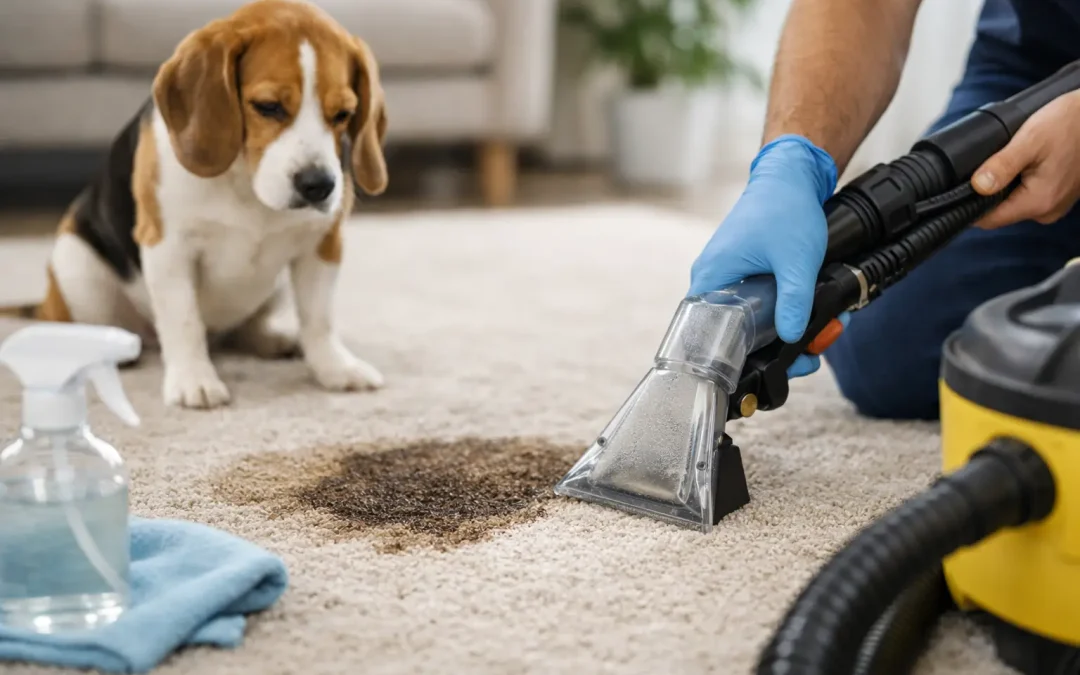
A carpet can look clean and still smell like urine the moment Tampa Bay humidity rises or the air conditioner cycles on. That is because pet urine odor carpet removal is not simply a stain-removal job. The visible spot may be gone, but odor-causing residue can remain in the carpet fibers, backing, padding, and sometimes the subfloor beneath.
For homeowners, landlords, and property managers, the goal is not to cover the smell with fragrance. It is to identify where the contamination reached and treat it thoroughly enough that the odor does not return after the carpet dries.
Why Pet Urine Odor Comes Back
Fresh urine is mostly water, but it leaves behind salts, proteins, and other compounds as it dries. Those deposits can reactivate when exposed to moisture. In Florida, that moisture may come from humid air, a rainy day, steam cleaning, or even a pet returning to the same area.
This is why a deodorizer sprayed over the carpet often produces only a temporary improvement. It may make the room smell better for a few hours, yet it does not necessarily reach the source below the surface. If urine soaked through the carpet, treating only the top fibers leaves residue in place.
Repeated accidents create a more difficult situation. Urine can spread outward and downward, especially on absorbent carpet and padding. Older spots may not be obvious to the eye, but the odor can still affect a bedroom, living room, rental unit, office, or customer-facing space.
Pet Urine Odor Carpet Removal Starts With Finding the Source
A proper assessment helps prevent wasted effort. Technicians look for discoloration, odor patterns, traffic areas, and signs that a pet has returned to one location. Ultraviolet inspection can help reveal some urine deposits, although it is not perfect. Other materials, cleaning products, and spills can also fluoresce, so findings should be confirmed through experience and odor evaluation.
The size of the stain is not always the size of the problem. A small surface mark can have a larger affected area in the padding. Conversely, a light odor may be limited to carpet fibers and respond well to a targeted treatment. The right approach depends on the age of the accident, the amount of urine, carpet construction, padding type, and whether contamination reached the subfloor.
For rental properties, identifying the full affected area before turnover can be especially valuable. Replacing carpet unnecessarily is expensive, but leaving odor behind can delay a move-in, lead to complaints, and encourage pets to mark the same location again.
What Professional Treatment Typically Involves
Effective treatment is designed to remove or neutralize odor at the level where the urine settled. The process may begin with extracting as much residue as possible from the carpet. A professional-grade cleaning method then lifts soils and contaminants that can hold odors in the fibers.
When urine has penetrated below the carpet face, technicians may apply a specialized odor treatment that reaches the backing and padding. Enzyme-based and oxidizing treatments can be useful in the right circumstances, but they are not interchangeable solutions. Product selection must account for the fiber type, dyes, prior cleaning attempts, and the extent of contamination.
Treatment time matters. Some odor-control products need adequate dwell time to work on the residue rather than being immediately rinsed away. The area is then carefully extracted and dried. Fast, thorough drying is particularly important in Tampa Bay, where indoor humidity can make carpet slow to dry and allow musty odors to complicate the original problem.
At Superior Tile & Carpet Care, trained technicians use professional equipment and green cleaning products selected to address the condition of the carpet while protecting the home or facility. The focus is on a cleaner, healthier result, not masking an odor until the next humid day.
When Carpet Cleaning Is Enough and When It Is Not
Many pet accidents can be resolved without replacing carpet. If the incident was recent, limited to one area, and treated before it reached the padding, professional cleaning and odor treatment may be all that is needed. This is often the most cost-effective outcome.
However, severe or repeated contamination may require additional steps. If the padding is saturated, it may need to be removed and replaced. If urine reached wood, concrete, or another subfloor material, that surface may need cleaning, sealing, or odor treatment before new padding or carpet is installed.
Carpet age also matters. Worn fibers hold soil more easily, and previous spot treatments may leave residues that interfere with cleaning. In a home with several pets or a long-standing odor issue, replacement may be the practical choice after the source has been addressed. New carpet installed over untreated contamination can absorb the odor and leave the original problem unresolved.
A reliable service provider should explain what is realistic before work begins. No one should promise that every odor can be removed from every carpet without first evaluating the affected materials.
Avoid These Common Odor Removal Mistakes
The fastest response after an accident is usually the best one. Blot fresh urine with clean, absorbent towels and apply steady pressure rather than scrubbing. Scrubbing can push liquid deeper and spread it across more fibers. Avoid soaking the area with household cleaners, because excess moisture can drive contamination farther into the padding.
Fragrance sprays, candles, and powders may make a room more pleasant temporarily, but they do not remove urine residue. Powders can also be difficult to fully remove from carpet and may leave behind a gritty feel. Steam from a consumer machine can help with surface soil, but heat and moisture alone do not solve odor at the backing or padding level.
Be cautious with strong chemicals. Products containing bleach, ammonia, or harsh solvents can damage carpet color, leave residues, or create unpleasant fumes. Ammonia-like odors may also be confusing to pets that are prone to marking. When in doubt, use a product approved for your carpet type or schedule a professional evaluation.
Preventing Repeat Accidents on Carpet
Odor removal works best when paired with prevention. Pets often return to familiar spots because they can still detect traces of urine even when people cannot. Complete source treatment helps break that cycle, but behavior and routine still matter.
Keep litter boxes clean and accessible, take dogs outside on a predictable schedule, and address changes in a pet’s habits with a veterinarian when needed. Sudden accidents can be linked to stress, aging, mobility issues, or health concerns. In multi-pet homes, giving each pet adequate space and resources can reduce territorial marking.
For households with young pets, older pets, or a history of accidents, consider placing washable rugs or pet-friendly barriers in high-risk areas while training or treatment is underway. Prompt cleanup remains the simplest way to protect carpet and padding from deeper contamination.
A Better Standard for Homes and Properties
Pet urine odors are frustrating because they can make a clean room feel neglected. They can also affect tenant satisfaction, showings, guest comfort, and confidence in the condition of a property. Addressing the issue early protects more than carpet appearance. It helps preserve the flooring investment and keeps indoor spaces more comfortable for the people who use them.
If an odor returns after cleaning, assume there may be more beneath the surface rather than continuing to add fragrance or spot cleaner. A careful inspection and a treatment plan matched to the actual level of contamination can provide a clearer path forward and a room that feels clean again.