A luxury vinyl plank floor can look spotless after a quick mop, yet still develop a dull film, sticky areas, or visible traffic paths over time. So, what is the best thing to clean luxury vinyl plank flooring? For most homes and businesses, the answer is a soft microfiber mop paired with a pH-neutral cleaner made for vinyl flooring, used with as little moisture as necessary.
Luxury vinyl plank, often called LVP, is designed to handle active households, pets, and commercial foot traffic. That durability does not make it maintenance-free. The wrong cleaner can leave behind residue, weaken the surface finish, or make the floor look cloudy. A simple, consistent routine is usually more effective than a harsh product used once in a while.
What Is the Best Thing to Clean Luxury Vinyl Plank Flooring?
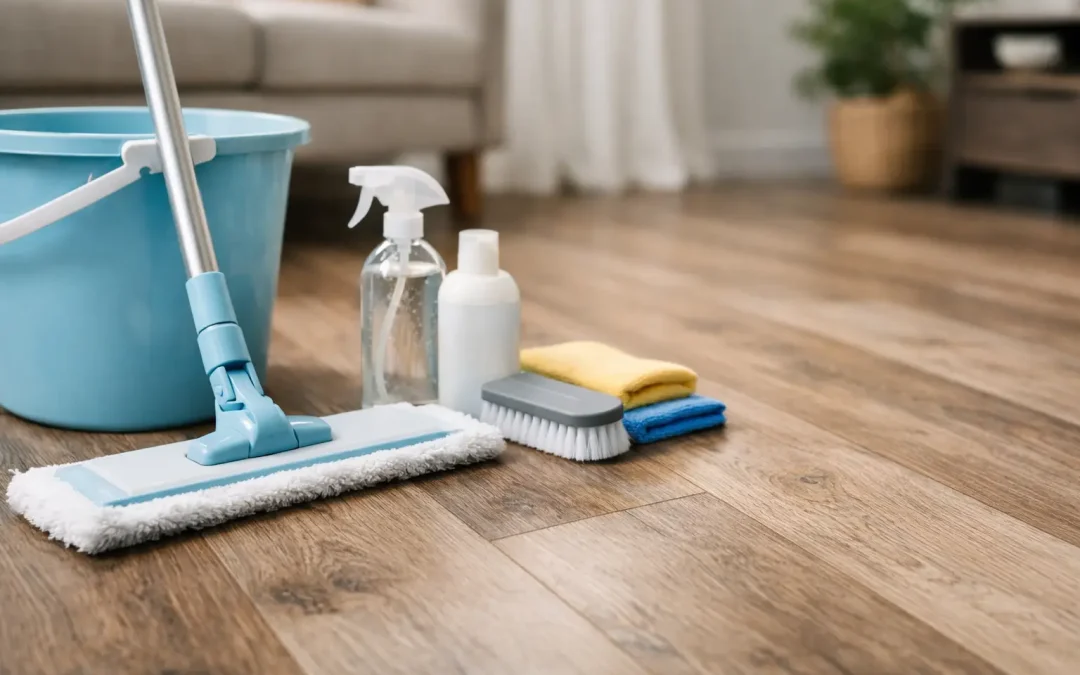
The safest everyday choice is a microfiber dust mop or vacuum with a hard-floor setting, followed by a lightly damp microfiber mop and a manufacturer-approved, pH-neutral vinyl floor cleaner. The mop should be damp, not wet enough to leave standing water or puddles on the planks.
Microfiber does the work that rough scrub pads and stiff bristles should not. Its fine fibers collect sand, pet hair, crumbs, and dust that can act like abrasives under shoes. This matters in Tampa Bay homes, where grit from sidewalks, patios, and beach outings can quickly collect at entrances.
A pH-neutral cleaner helps remove normal household soil without relying on harsh acids, strong alkalis, bleach, or solvents. It should lift dirt cleanly and dry without a slick or cloudy coating. If a cleaning product leaves the floor feeling tacky after it dries, it may be leaving residue behind. In that case, repeated use often makes the problem worse rather than better.
Always check the flooring manufacturer’s care instructions first. Some LVP brands permit a diluted mild dish soap solution for occasional cleaning, while others recommend only their approved products. When instructions differ, follow the floor manufacturer’s guidance to protect the warranty.
Start With Dry Soil Removal
A clean-looking floor can still carry fine grit that scratches its protective wear layer. Dry soil removal is the first step, not an optional extra before mopping. Sweep with a soft broom, use a microfiber dust mop, or vacuum with the beater bar turned off.
Avoid vacuums with stiff rotating brushes unless the manufacturer specifically says they are safe for vinyl. Those brushes can leave fine marks or wear at edges over time. A soft hard-floor attachment is the better choice.
For most households, dry mopping or vacuuming two to three times a week is enough. Homes with large dogs, children, frequent guests, or direct access to outdoor areas may need it daily. Property managers and commercial facilities should set a schedule based on foot traffic, especially in lobbies, hallways, break rooms, and retail entrances.
How to Mop LVP Without Leaving a Film
Once loose soil is removed, use a clean microfiber mop pad and a properly diluted pH-neutral cleaner. A spray mop is often useful because it applies a controlled amount of solution instead of soaking the floor.
Work in small sections and change or rinse the mop pad when it becomes visibly dirty. Mopping the entire floor with a gray, overloaded pad can redistribute soil and create streaks. If the floor has not been cleaned for a while, two gentle passes with fresh water or a fresh pad are better than using a stronger chemical.
Water is not usually a problem in small amounts on a well-installed vinyl floor, but excess moisture is never a good idea. Do not flood-mop LVP, and do not leave wet towels or spills sitting along plank seams. Water can work beneath loose edges or into damaged areas, affecting the subfloor or adhesive below.
After mopping, allow the floor to air-dry. If it appears streaky, the issue may be too much product rather than too little. A final pass with a clean, barely damp microfiber pad can remove leftover residue.
Clean Spills and Stains Promptly
The longer a spill remains on a floor, the more likely it is to become sticky, discolored, or difficult to remove. Blot liquid spills with a soft absorbent cloth, then wipe the area with a lightly damp microfiber cloth and a small amount of neutral cleaner.
Food, grease, and tracked-in dirt often respond to gentle cleaning and patience. For a sticky spot, hold a warm, damp cloth over the area briefly, then wipe it clean. Do not scrape aggressively with metal tools, razor blades, or abrasive pads.
Scuffs from shoes, carts, or furniture can sometimes be lifted with a clean microfiber cloth and a vinyl-safe cleaner. Test any spot-treatment product in a hidden location first. A product that works on one floor finish may dull or discolor another.
Pet accidents should be cleaned quickly, especially if they reach seams or sit beneath area rugs. Use a vinyl-safe cleaner formulated to address the soil without saturating the flooring. Strong odor-covering sprays are not always the answer. If odor persists, moisture or contamination may have reached the subfloor or a gap around the planks.
Products and Methods to Avoid on Luxury Vinyl Plank
Many common cleaning habits can make LVP look worse over time. Avoid these products and methods unless your flooring manufacturer specifically approves them:
- Steam mops, which can force heat and moisture into plank seams and adhesive areas
- Wax, polish, acrylic finish, or “shine” products that create buildup and attract dirt
- Abrasive powders, scouring pads, steel wool, and stiff-bristle brushes
- Ammonia, bleach, strong solvents, and high-alkaline degreasers
- Oil soaps and heavily fragranced cleaners that can leave a slippery residue
- Flood mopping or using a dripping-wet mop
Vinegar deserves a careful mention. Some homeowners use a diluted vinegar-and-water mixture because it is familiar and inexpensive. However, vinegar is acidic, and repeated use may not be recommended for every vinyl finish. It can also leave the floor looking dull if it does not match the manufacturer’s care guidance. A pH-neutral vinyl cleaner is the more dependable long-term choice.
Protect the Floor Between Cleanings
Good cleaning results start before the mop comes out. Place quality mats at exterior doors to catch sand and moisture, but choose non-staining mats without rubber or latex backings that could discolor the vinyl. Clean those mats regularly so they continue trapping dirt instead of releasing it back onto the floor.
Use felt protectors under furniture legs, especially under dining chairs and pieces that move often. Lift furniture rather than dragging it, and use wide protective pads when moving heavy appliances or equipment. In commercial spaces, check chair casters, rolling carts, and entry mats regularly because concentrated wear can become noticeable long before the rest of the floor looks dirty.
Sunlight can also change how a floor appears. Window coverings, UV-filtering film, or occasional furniture rearranging can help limit uneven fading in rooms with strong Florida sun exposure.
When Professional LVP Cleaning Makes Sense
Routine care handles most day-to-day dirt, but professional service can be useful when the floor has widespread haze, greasy buildup, stubborn traffic soil, post-construction dust, or cleaning-product residue that will not come off with normal mopping. A trained floor-care technician can identify whether the issue is surface buildup, embedded soil, wear-layer damage, moisture intrusion, or a problem below the flooring.
This distinction matters. Aggressive scrubbing may remove some visible soil while damaging the finish, and excessive moisture can turn a cosmetic concern into a more expensive repair. For rental homes, offices, and customer-facing facilities, professional maintenance can also help keep flooring presentable without disrupting normal operations.
Superior Tile & Carpet Care uses professional-grade methods and green cleaning products selected for the surface being treated. The goal is not to make a vinyl floor artificially shiny. It is to remove the soil and residue that hide its intended finish while protecting the flooring investment.
A lightly damp microfiber mop, a pH-neutral vinyl cleaner, and prompt spill care will keep most luxury vinyl plank floors in good condition. When the floor still looks cloudy, sticky, or worn after careful cleaning, treat that as a signal to get the cause checked before trying stronger products.