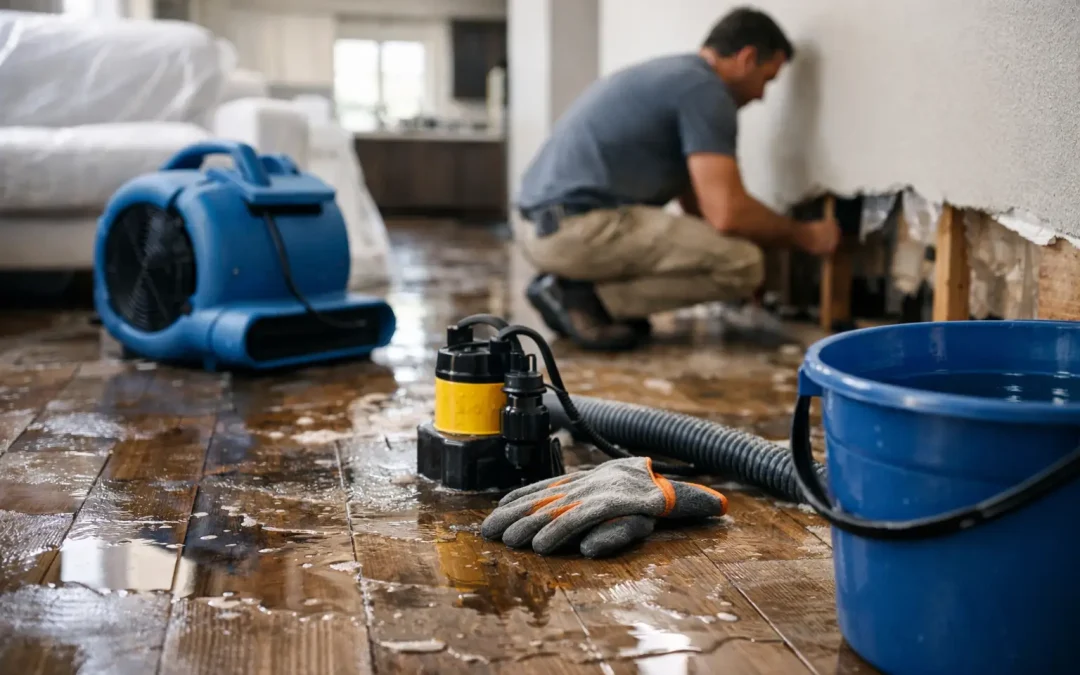
A washing-machine hose lets go, a roof leak appears after a hard Florida storm, or a toilet overflows when no one is watching. The first few hours can determine whether you are dealing with a manageable repair or damaged flooring, hidden mold, and a larger insurance claim. Knowing what to do after water damage helps protect the people in the property as well as the building itself.
Water does not stay where it first lands. It can travel beneath luxury vinyl plank, soak into carpet padding, wick up drywall, and settle inside baseboards and subflooring. Tampa Bay’s heat and humidity can slow drying and create favorable conditions for microbial growth, so a prompt, methodical response matters.
Put safety ahead of cleanup
Before touching wet flooring or moving belongings, identify the source of the water. If it is safe to do so, shut off the supply valve for a plumbing leak or turn off the main water supply. For a roof leak or storm-related intrusion, move people and valuables away from the affected area and contain drips with buckets where possible.
Do not walk through standing water if electrical outlets, appliances, extension cords, or the breaker panel may be affected. Turn off electricity to the impacted area only if you can reach the breaker safely without entering water. If there is any doubt, wait for a qualified electrician or emergency restoration professional.
The type of water also changes the right response. Clean water from a supply line is generally less hazardous at the start, but it can become contaminated if it sits. Water from a dishwasher, washing machine, or toilet without waste may contain contaminants. Sewage backups, toilet overflows involving waste, and outdoor floodwater should be treated as contaminated water. Keep children, pets, tenants, and employees away from these areas, and do not attempt to extract or sanitize them with ordinary household equipment.
Stop the spread and protect what you can
Once the area is safe, act quickly to limit additional damage. Move dry furniture, area rugs, boxes, and electronics away from wet flooring. Place foil, plastic blocks, or small wood blocks under furniture legs that cannot be moved to reduce staining and moisture transfer. Avoid dragging furniture across wet carpet, since this can damage fibers and spread water farther through the room.
If the water is clean and the affected area is small, towels and a wet/dry vacuum may help remove surface water. Do not use a standard household vacuum on wet flooring. Avoid lifting wall-to-wall carpet on your own, especially if the water source is uncertain. Carpet can tear, seams can separate, and contaminated water may be spread into areas that were originally dry.
For commercial properties, isolate the affected room or section of the facility when possible. A simple barrier, clear signage, and a temporary change in foot traffic can prevent slips while protecting customer-facing areas. Property managers should notify occupants promptly, document their report of the incident, and arrange access for inspection and drying work.
Document the damage before major cleanup begins
Take clear photos and video of the source, standing water, affected flooring, walls, furniture, and personal belongings. Include wide shots that show the room and close shots that show visible damage. If a pipe burst or an appliance failed, photograph the equipment and any visible cause before it is repaired or removed.
Make a basic inventory of damaged items, including the item, approximate age, condition, and any identifying details available. Save receipts for emergency plumbing, temporary lodging, restoration, and other reasonable expenses. This documentation can support an insurance claim and give restoration professionals a more complete picture of what may be wet behind finished surfaces.
Contact your insurance carrier early, particularly when water has reached multiple rooms, entered through the roof, affected cabinetry, or involved a burst pipe. Coverage depends on the policy and the cause of loss. Sudden plumbing failures may be handled differently from gradual leaks, groundwater intrusion, or storm surge. Do not wait for a claims decision before beginning reasonable mitigation – preventing additional damage is usually expected, and delaying drying can make the loss worse.
What to do after water damage: begin professional drying
Removing visible water is only the first step. Materials can feel dry on the surface while moisture remains underneath. Carpet padding, wood subfloors, drywall, insulation, cabinets, and flooring underlayment may all hold water out of sight.
Professional water restoration begins with an inspection of the affected materials and moisture levels. Certified technicians use extraction equipment, air movers, dehumidifiers, and moisture-detection tools to remove water and dry the structure in a controlled way. The goal is not simply to make a room look dry. It is to bring materials back to an appropriate moisture level and reduce the risk of odors, warping, mold growth, and long-term deterioration.
The best approach depends on the material and how long it has been wet. A clean-water incident caught quickly may allow some carpet and pad to be dried and restored. Carpet exposed to contaminated water often requires removal, along with affected padding. Luxury vinyl plank can sometimes be cleaned and dried, but moisture trapped beneath floating planks may require selective removal and inspection of the subfloor. Hardwood may cup, buckle, or stain if drying is delayed or too aggressive. Each material needs a different plan.
Opening windows is not always the answer in Florida. When outdoor humidity is high, open windows can introduce more moisture rather than speed drying. Fans can be useful in limited, clean-water situations, but they do not replace proper dehumidification or moisture monitoring. In a contaminated-water event, fans may also spread contaminants to other areas.
Watch for damage that is easy to miss
Water intrusion often leaves clues after the puddle is gone. Pay attention to musty odors, soft or swollen baseboards, bubbling paint, discolored drywall, loose tile, warped flooring, or carpet that still feels damp near walls and transitions. These signs can point to moisture inside a wall, below flooring, or beneath cabinetry.
Do not cover these signs with rugs, furniture, or fresh paint. Painting over water-stained drywall without addressing the moisture source can trap a problem that later returns as staining, odor, or mold growth. Similarly, reinstalling an area rug before the floor below it is fully dry can hold moisture against the surface.
Mold can begin developing quickly when moisture remains available, but not every discoloration is mold and not every water event requires extensive demolition. The right scope depends on the source of water, the affected materials, the size of the area, and verified drying results. A careful assessment prevents both underreacting and paying for unnecessary work.
Clean and restore surfaces after drying
After the structure is dry and any necessary repairs are complete, the focus shifts to restoring the appearance and cleanliness of the space. Carpets may need professional cleaning to remove tracked-in soil, residue, and odor. Tile and grout can collect contaminants after water moves across the floor, while upholstery and area rugs may need specialized care if they were exposed.
Use cleaning products appropriate for the surface and the type of water involved. Strong chemicals can discolor carpet, damage natural stone, strip protective finishes, or leave residues that attract dirt. For properties with children, pets, customers, or employees, ask about cleaning methods and green product options that support a healthy indoor environment.
A family-owned local provider such as Superior Tile & Carpet Care can coordinate emergency water removal, drying, floor restoration, and post-loss cleaning so you are not left trying to manage several separate problems at once. For homeowners, that means clearer next steps. For property managers and businesses, it can mean less disruption and a faster return to a safe, presentable space.
Prevent the next water emergency
Once repairs are complete, take a few practical steps to reduce the chance of another incident. Replace aging supply hoses, inspect appliance connections, clear gutters and roof drainage paths, and repair small leaks before they become hidden damage. In rental and commercial properties, establish a simple reporting process so occupants know whom to call immediately when they notice water.
Water damage is stressful because the situation changes fast. A calm response – protect people, stop the source, document conditions, and start proper drying – gives your property the best chance of coming back clean, safe, and ready to use.